Best Materials for Laser Photo Engraving
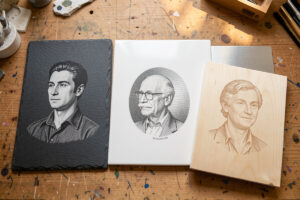
The best materials for laser photo engraving are the ones that produce the widest tonal range with the most contrast: coated ceramic tile and anodized aluminum top the list for jet-black or bright-silver detail, slate is the best cheap high-contrast option, and pale even-grained wood is the most accessible for diode owners. Across the dozens of materials I keep on the bench, contrast and a clean white point matter far more than hardness or price.
This is the materials companion to the complete photo engraving guide. A photo only looks like a photo when the material can hold a real range from true black to true white. Some materials give you that for free; others fight you. Here is how I rank the ones worth your time, and which machine each one wants.
What makes a material good for photos
A good photo material does one thing well: it changes appearance sharply where the beam hits and stays untouched where it does not. That gives you contrast. The materials that disappoint are the ones with a narrow change — a wood that only goes from tan to slightly-darker-tan has maybe two stops of range, so every portrait on it looks flat. Slate frosts bright white against near-black stone, which is why it punches so far above its price. Coatings cheat the problem entirely by fusing a hard black mark onto a white substrate.
Coated ceramic tile: the highest contrast
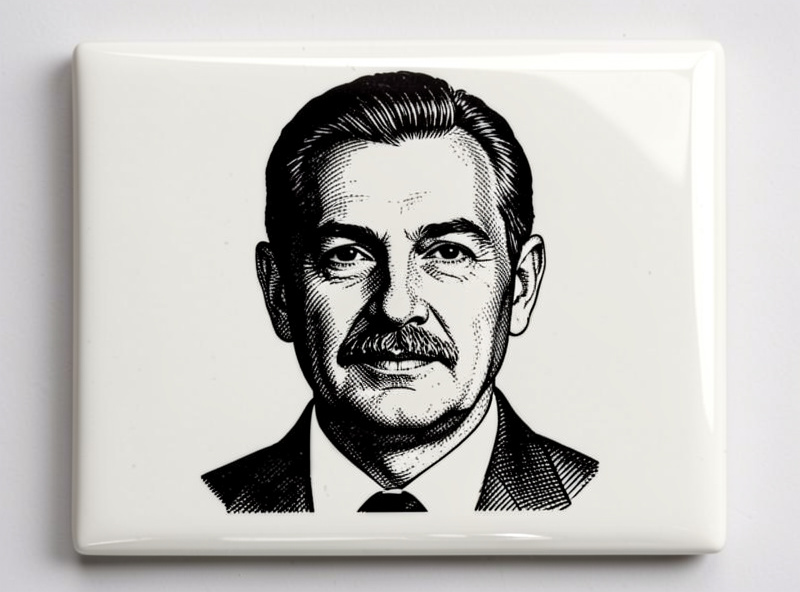
White glossy tile sprayed with a marking coating, or pre-coated photo tile, gives the most striking black-on-white photo you can make on a desktop machine. The beam fuses the coating into a permanent jet-black mark exactly where it hits, and the loose residue washes off everywhere else. The result reads like a printed photograph. A diode handles it with a marking spray; a CO2 does it cleaner still. I walk through the whole process in laser engraving ceramic tile.
Anodized aluminum: bright, easy, forgiving
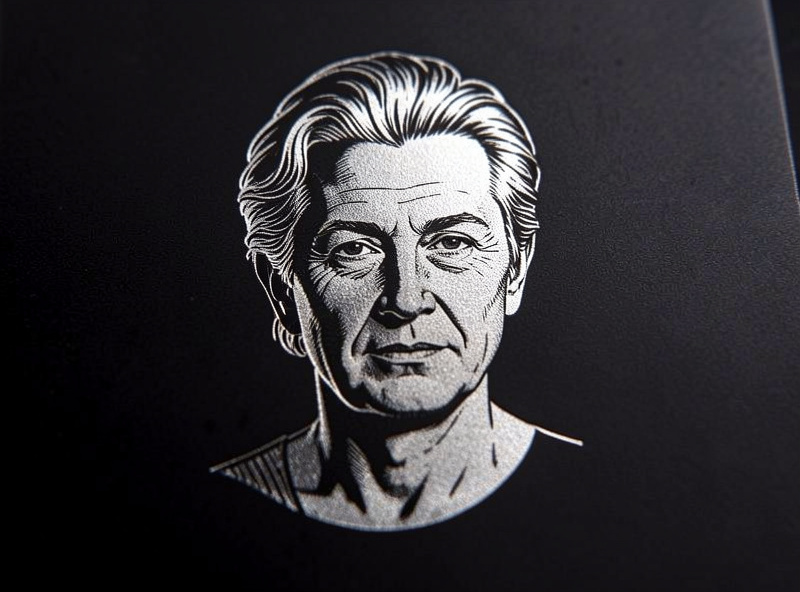
Anodized aluminum is the easy win for metal photos. The beam ablates the colored anodized dye layer to expose bright bare aluminum underneath, so a black anodized plate gives you silver-on-black with almost no fuss and a wide forgiving settings window. A fiber marker does it best, but a CO2 with the right settings manages it too. It is fast, repeatable, and nearly impossible to scorch, which makes it my go-to when someone wants a metal keepsake without the cost of a fiber-only job.
Slate: the best value by a mile
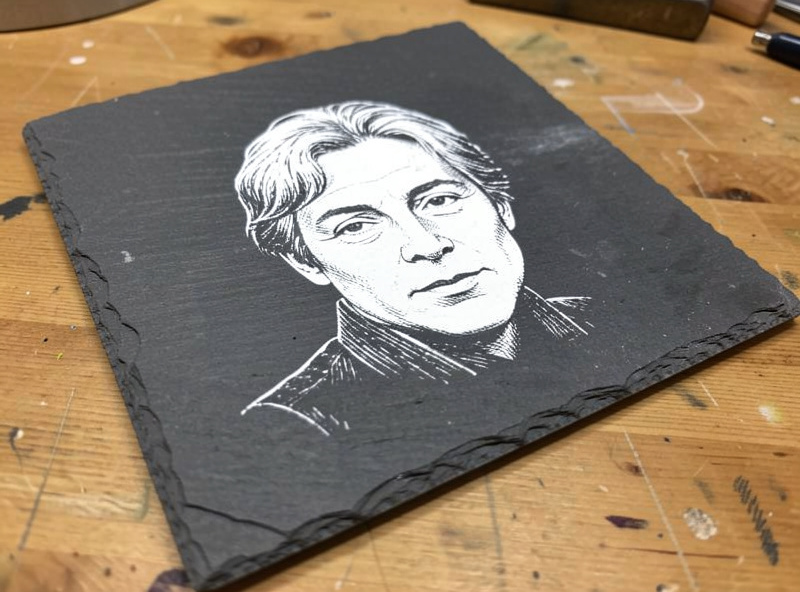
Slate is where I send beginners. Coasters and tiles cost very little, the surface frosts bright white against the dark stone, and almost any machine — diode or CO2 — gets a strong result. Dithering suits it because slate is essentially a black-or-white surface, and a light oil wipe afterward deepens the contrast even further. The only catch is that natural slate varies, so the test card matters per batch. My full settings and the soap trick are in slate laser engraving, and the broader stone picture is in the best stone materials guide.
| Material | Best machine | Contrast | Cost | Notes |
|---|---|---|---|---|
| Coated ceramic tile | CO2 / diode + spray | Excellent | Low–med | Jet black on white, reads like print |
| Anodized aluminum | Fiber / CO2 | Excellent | Medium | Silver on black, very forgiving |
| Slate | Diode / CO2 | Excellent | Very low | Best value, frost-white detail |
| Stainless (anneal) | Fiber / MOPA | Excellent | Medium | True continuous grayscale |
| Maple / basswood | Diode / CO2 | Good | Low | Most accessible, watch the grain |
| Veg-tan leather | Diode / CO2 | Good | Medium | Warm tones, scorches easily |
| Marble | CO2 / diode | Good | Medium | Softer contrast, elegant look |
| Cast acrylic (reverse) | CO2 | Good | Low–med | Frosted back-engrave, lights up |
Stainless steel: true grayscale on a fiber
If you have a fiber or MOPA marker, annealed stainless is the connoisseur’s photo material. Annealing heats the steel to grow a thin oxide that gives genuine continuous grayscale — not dithered dots, but real smooth tone — in shades from straw to deep black depending on energy. It is slower and demands careful settings, but the result is the most photographic of any metal. I cover the marking side in fiber laser metal marking and the color side in MOPA stainless color marking.
Wood: the accessible workhorse
Most people start on wood because they already own a diode and a board is cheap. The winners are pale, tight, even-grained species — maple, basswood, birch ply, alder — because strong grain reads as fake shadow in a face. It will never match tile for contrast, but a well-prepped portrait on maple looks genuinely good and is the easiest gift to make. Wood has enough quirks that it gets its own guide in how to laser engrave photos on wood, and the species ranking is in best wood for laser engraving.
Leather, marble, acrylic, and glass
Veg-tan leather burns warm brown tones and makes a beautiful portrait, though it scorches easily and smells strong, so air assist and patience matter — settings are in laser engraving leather. Marble gives a soft, elegant low-contrast image suited to memorial work, covered in the marble guide. Cast acrylic engraved on the reverse frosts to a positive image that glows when edge-lit, a CO2 trick from the edge-lit acrylic work. Glass frosts but chips easily and reads low-contrast — the technique is in glass frosting.
Matching the material to the subject
Beyond raw contrast, I pick the material to suit what the photo is for. A bright, punchy portrait of kids or a pet wants the high-contrast snap of coated tile or slate, where every highlight stays clean and the eyes pop. A memorial or anniversary piece often reads better with the softer, warmer tones of marble, wood, or leather, where a gentler gradient feels less clinical and more like a keepsake. Metal sits in between — anodized aluminum for a modern, crisp look, annealed stainless for something heirloom and tactile.
Surface finish changes the read too. A matte material scatters light and shows the engrave evenly from any angle, which is why I keep wood and slate finishes matte; a glossy tile or polished metal looks stunning head-on but throws glare that can hide detail under room lighting. When a piece is going behind glass in a frame, I lean toward the matte options so the final, mounted result is what the customer actually sees — not a reflection of the window.
The one rule that overrides material choice
Never let the search for a cool material talk you into running something unidentified. PVC, vinyl, and many cheap coated “photo blanks” release chlorine gas that corrodes the machine and harms your lungs. If you cannot confirm what a blank is made of, it does not go under the laser until you have identified it — the reasons are in the PVC dangers guide. No portrait is worth poisoning your workshop.
Frequently Asked Questions
What material gives the best contrast for laser photo engraving?
Coated ceramic tile and anodized aluminum give the highest contrast, producing jet-black or bright-silver detail that reads like a printed photo. Slate is the best very-low-cost option, frosting bright white against dark stone.
What is the best material for a beginner engraving photos?
Slate. It is cheap, forgiving, works on both diode and CO2 machines, and frosts to high contrast with dithering. Pale wood like maple or basswood is a close second if you already own a diode laser.
Can you laser engrave photos on metal?
Yes. Anodized aluminum is easy and forgiving on a fiber or CO2, giving silver on black. Stainless steel annealed on a fiber or MOPA marker produces true continuous grayscale, the most photographic metal result available.
What wood is best for engraving photos?
Pale, tight, even-grained species: maple, basswood, birch plywood, and alder. Strong grain reads as fake shadow in a face, so avoid heavily figured woods. Prep the image for high contrast since wood has a narrower tonal range than tile.
Why do my wood photos look flat compared to tile?
Wood has a narrower tonal range than coated tile or slate, often only going from tan to darker brown. Tile and slate swing from true white to true black, which is far more contrast. Prep the image harder and pick the palest even-grained wood you can.