Best Stone Materials for Laser Engraving: A Buyers Guide
If you are buying stone blanks for laser engraving for the first time, the single most useful thing to know is that not all stone is created equal under the beam — some materials practically engrave themselves while others fight you for every clean mark. After running slate, ceramic tile, granite, marble, and travertine across both my diode and my CO2, I have a clear ranking of which stone to reach for depending on your machine, your skill level, and the project. This guide is the buyer’s-eye companion to the deeper material pages: which stone to start with, which to grow into, and which to leave for later.
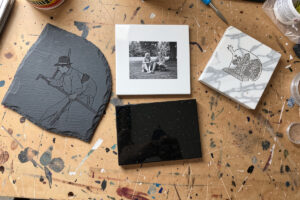
The short version: start with slate, add ceramic tile early, move to granite when you want premium results, and save marble for when you can read contrast confidently. Travertine is the wildcard for anyone wanting depth and colour fill. Below I break down each material on the factors that actually matter when you are choosing a blank — how easily it marks, the contrast you get, which machine it wants, and what it is best used for. If you want the full physics and workflow, the stone engraving guide covers that; this page is about choosing the right material.
One rule cuts across every choice below: the material has to suit both your machine and the project, not just look good in a photo. A polished marble slab is wasted on a diode owner who has not yet learned to read wandering contrast, and a slate coaster is overkill effort if a cheap tile photo is what the customer actually wants. Match the stone to the job and to the laser you own, and every one of these materials delivers.
Slate — The Best Starting Stone
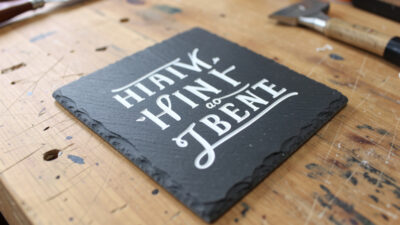
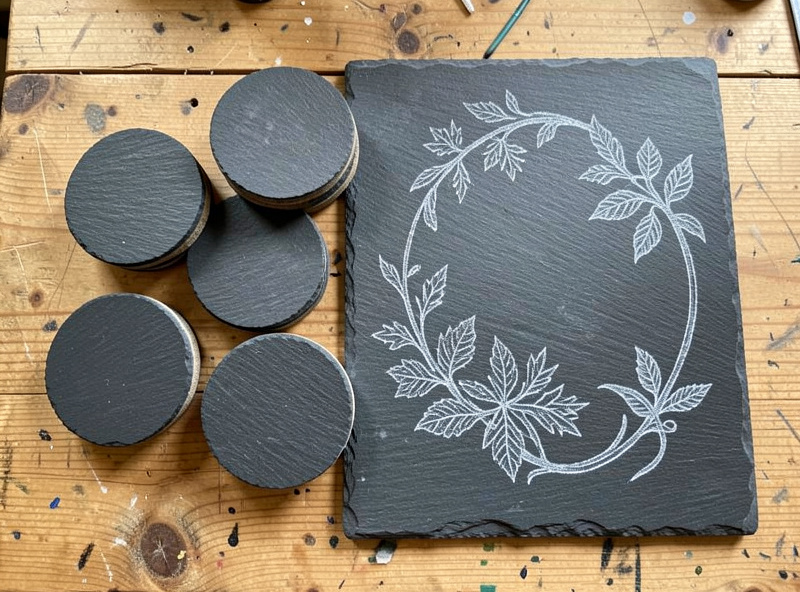
Slate is where everyone should start, and it stays a favourite long after you have outgrown beginner status. It is cheap, flat, naturally dark, and it frosts to a beautiful pale contrast with almost no effort — even a modest diode marks it cleanly. The famous soap trick pushes the frost whiter and more even, and the whole material is forgiving of imperfect settings. You can buy slate coasters, cheese boards, and house-sign blanks in bulk for very little, which makes it ideal for practice and for production alike. The dedicated slate laser engraving build covers the soap method and settings in full.
The one limitation is that slate is, by nature, a rough and slightly irregular natural stone, so it suits bold designs and lettering better than ultra-fine detail. For coasters, signs, ornaments, and gifts, it is unbeatable value and the lowest-risk material on the bench. If you own only a diode and want a stone that will reward you on day one, this is the one to buy.
One buying note: slate quality varies. Cheap natural slate can have flaky surfaces or uneven thickness that rocks on the bed, so look for blanks described as flat and finished, and expect to shim the occasional warped one. Even with that minor variation, the contrast you get for the price is unmatched, and a single bulk pack of coaster blanks will carry you through weeks of learning before you spend a krona on anything fancier.
Ceramic Tile — Cheap Photos and Decor
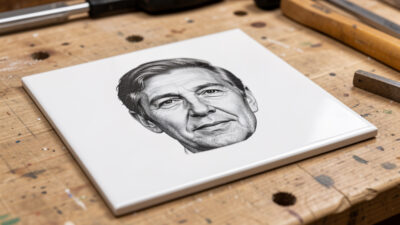
Ceramic tile is the next material to add, and it punches far above its cost. Plain white gloss field tiles cost almost nothing, and with a thermal-bonding coating they produce true jet-black photographic engraves that look genuinely premium. Tile is the material for photo work, custom decor, and personalised gifts where you want bold black-on-white. It does require the coating step — a bare glaze engrave is faint — so there is slightly more process than slate, but the results justify it. The full method is in the ceramic tile build.
Tile marks well on both diode and CO2, with CO2 faster on a batch. The main caution is to stick to known plain tiles and never laser an unknown decorative glaze or coating. For anyone wanting to do photo engraves cheaply, tile is the best value in the entire stone family.
The economics are what make tile special. A single hardware-store tile costs a fraction of a slate blank, and the coating goes a long way, so the per-piece cost of a finished photo tile is genuinely tiny. That low cost also means you can afford to ruin a few learning the photo-prep and coating steps without it stinging. The flip side is the extra process — coat, dry, engrave, wash — so tile is slightly more involved than the grab-and-go simplicity of slate, but the photographic result is something no other stone matches at any price.
Granite — The Premium Look
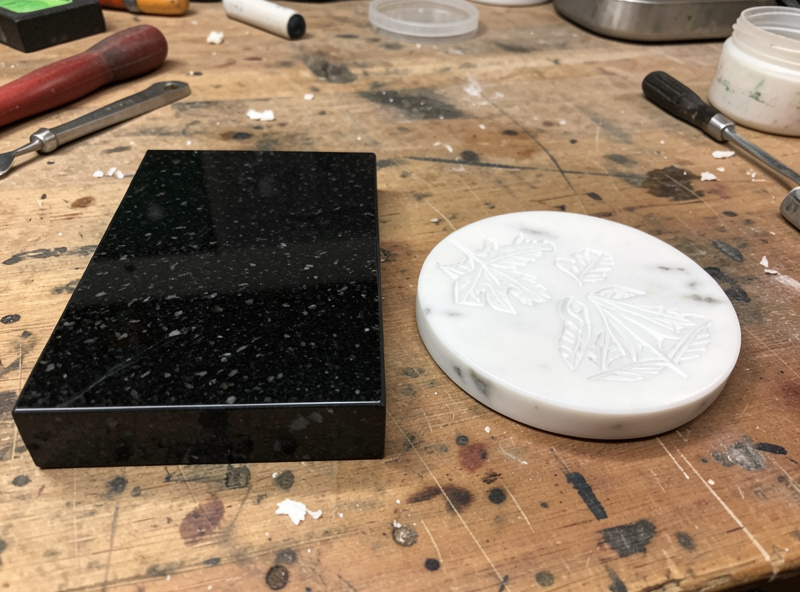
Granite is the material to reach for when you want a result that reads as serious and permanent — memorials, premium house signs, award plaques. Dark and black polished granite frosts to a crisp light-grey mark with the highest contrast and the cleanest edges in the family, and it engraves cleanly on a diode despite its premium look. It holds fine lettering better than rougher slate, making it the best stone for detailed text. The trade-off is cost and a slightly less forgiving setting window — too much power muddies the frost — covered in the granite settings build.
For anyone moving from practice pieces to work they want to sell or gift as premium items, granite is the natural step up. It is the most professional-looking material here and still well within reach of a hobby diode.
When buying granite, darker is better for contrast — black and dark-grey polished tiles give the brightest frost, while speckled or lighter granites can muddy the read. Floor and wall tiles from a tile supplier are an affordable source, and they come pre-polished and flat, which saves you prep. Check the backs, since some have an uneven sawn back that needs shimming, but the polished face is usually dead flat and ready. For a handful of premium pieces a year, a small stack of black granite tiles costs little and elevates the whole catalogue of what you can offer.
Marble — Beautiful but Temperamental
Marble is the most beautiful and the least forgiving stone in the group. On light marble the laser darkens the surface into a soft etched mark that looks like fine etching, but the veining and uneven hardness make contrast wander, and polished marble couples better with CO2 than with a diode. It is a stone to grow into rather than start on — gorgeous results for coasters, plaques, and premium gifts when you can read your contrast and choose your slabs, but frustrating if you treat it like slate. The marble guide covers the patience it demands.
If you own a CO2 and want the most elegant, fine-etched look, marble rewards the effort. If you own only a diode and are early in your stone journey, leave it until you have slate and granite mastered.
Travertine — Depth and Colour Fill
Travertine is the soft, porous oddball, and it behaves differently enough to be worth knowing. Because it is genuinely softer than the other stones, the laser engraves with real depth rather than just surface frost, so it behaves more like cutting and the porous surface drinks a paint fill beautifully. That makes travertine the natural home for the paint-fill technique — coloured lettering sits crisp in the recess. It suits rustic decor, coasters, and pieces where a coloured, textured look is the goal. It marks on both diode and CO2 and is more forgiving than marble, sitting in the middle of the difficulty range.
Travertine’s porosity is both its charm and its caveat. The same open structure that holds a paint fill so well also makes it prone to staining if left unsealed, so a finished travertine piece really wants a seal coat to earn its keep on a table. And because the surface is naturally pitted and varied, fine detail can get lost in the texture — travertine rewards bold designs and coloured fills over delicate line work. For a maker who wants a rustic, hand-made character with deliberate colour, nothing else in the family delivers it the same way.
A Word on Buying Safely
Whatever stone you buy, the same safety rule governs the purchase: stick to known, identifiable materials and never laser an unknown coating or sealed surface. Raw stone is inert and will not outgas chlorine like PVC, but a mystery decorative coating or factory sealant on a blank is the same hard stop as any unknown coated stock — test a corner in a ventilated enclosure first, or buy raw blanks you can identify. Air assist and ducted exhaust run on every stone job regardless, per the laser safety essentials discipline, and you never run the job unattended.
Disclosure: Some links below are affiliate links. If you buy through them I may earn a small commission at no extra cost to you. I only point to materials I actually use on my own bench.
To start, a bulk set of slate coaster blanks is the lowest-risk way to learn, and a stack of white gloss ceramic tiles opens up cheap photo work. When you want the premium look, a set of polished black granite tiles gives the highest contrast in the family.
Stone Materials Compared for Laser Engraving
| Material | Ease | Contrast | Best Machine | Best For | Cost |
|---|---|---|---|---|---|
| Slate | Easiest | Light frost on dark | Diode or CO2 | Coasters, signs, beginners | Low |
| Ceramic tile | Easy (needs coating) | True black (coated) | Diode or CO2 | Photos, decor | Very low |
| Granite | Medium | Crisp light-grey frost | Diode or CO2 | Memorials, premium signs | Medium |
| Marble | Hardest | Soft darkened etch | CO2 preferred | Plaques, premium gifts | Medium-high |
| Travertine | Medium | Depth + colour fill | Diode or CO2 | Rustic decor, coasters | Low-medium |