Laser Safety Essentials Protecting Your Eyes Lungs and Workshop
Why Safety Deserves Priority Attention
Laser safety represents the foundation upon which all productive and enjoyable laser work builds. Operating powerful laser systems without proper safety protocols invites permanent eye damage, respiratory illness, fire hazards, and legal liability. Unlike many hobbies where mistakes mean ruined projects, laser safety errors cause irreversible personal harm. This reality demands that every laser operator, regardless of experience level, internalize safety principles before producing a single cut or engraving.
The gap between safe and unsafe laser operation often comes down to knowledge and discipline rather than equipment sophistication. Beginners with $300 diode lasers operating with proper safety glasses and ventilation face less risk than professionals with $10,000 industrial machines who skip precautions. Understanding specific hazards associated with your laser type, wavelength, and materials enables you to implement appropriate protections systematically.
This guide provides comprehensive safety information covering eye protection for different laser wavelengths, respiratory protection from laser-generated fumes and particulates, fire prevention in your workshop, material toxicity awareness, enclosure requirements, and emergency response procedures. Master this content before operating any laser system, and review it periodically as you advance into new materials and higher power levels.
Understanding Laser Eye Hazards
Laser light poses unique eye dangers because it is coherent and collimated, meaning the beam maintains tight focus over long distances and concentrates enormous energy density at the point of contact. Unlike diffuse light sources that scatter harmlessly, laser beams deliver concentrated energy capable of instantly and permanently damaging retinal tissue before the blink reflex can respond. Understanding wavelength-specific hazards and implementing proper eye protection represents your highest safety priority.
How lasers damage eyes: Visible and near-infrared lasers (400-1400nm wavelengths) transmit through the eye’s cornea and lens, focusing to tiny spots on the retina. Even milliwatts of power concentrated at these focal points exceed tissue damage thresholds instantly. The retina lacks pain receptors, so you may not notice damage occurring until vision loss appears hours or days later. Far-infrared lasers (like CO2 at 10600nm) absorb in the cornea rather than transmitting to the retina, causing different but equally serious damage patterns.
Wavelength-specific protection requirements: Different laser types require different safety glasses because protection depends on the specific wavelength emitted. CO2 lasers at 10.6 micrometers require glasses blocking far-infrared radiation. Blue diode lasers at 445-450 nanometers need visible-light protection in the blue spectrum. Fiber lasers at 1064 nanometers require near-infrared protection. Generic “laser safety glasses” without wavelength specifications provide inadequate protection. Always verify that your glasses are rated for your specific laser’s wavelength with appropriate optical density (OD) ratings, typically OD4 or higher for hobbyist machines.
Proper safety glasses selection: Purchase laser safety glasses only from reputable manufacturers providing wavelength and OD specifications. Look for ANSI Z136.1 or EN207 certification indicating tested protection levels. Glasses should fit securely without gaps where stray beams could enter, and should be comfortable enough that you actually wear them during operations. Keep glasses clean and inspect regularly for scratches or damage that compromise protection. Never rely on regular sunglasses, welding helmets, or improvised protection, these do not block laser wavelengths specifically and offer false confidence.
Indirect exposure risks: Direct beam strikes represent only one eye hazard category. Specular reflections from shiny surfaces, diffuse reflections from matte materials, and scattered radiation from the laser interaction point all pose risks depending on power levels. High-power CO2 systems can cause eye damage from diffuse reflections at close range. Always wear protection during alignment procedures, test firing, and operation. Understanding your specific laser type’s characteristics helps assess reflection risks accurately.
Respiratory Protection: Fumes and Particulates
Laser processing vaporizes material, creating fumes, gases, and microscopic particulates that present serious respiratory hazards. The composition of these emissions varies dramatically based on materials processed, ranging from relatively benign wood smoke to deadly hydrogen cyanide from certain plastics. Understanding material-specific hazards and implementing proper ventilation protects your lungs from acute poisoning and chronic damage.
How laser emissions harm lungs: Vaporized material recondenses into nanoparticles small enough to penetrate deep into lung tissue, bypassing the body’s natural filtration. These particles carry toxic compounds into the alveoli where gas exchange occurs, potentially causing inflammation, tissue damage, and long-term respiratory disease. Gaseous byproducts including carbon monoxide, formaldehyde, and hydrogen chloride cause immediate symptoms at high concentrations and chronic effects from repeated exposure.
Material toxicity warnings: Certain materials release particularly dangerous emissions requiring absolute avoidance or extreme ventilation precautions. PVC and vinyl products generate hydrochloric acid and phosgene gas when lasered, damaging equipment and poisoning operators. PTFE (Teflon) releases perfluoroisobutylene, a chemical warfare agent analog. ABS plastic produces hydrogen cyanide. Leather with chromium tanning releases hexavalent chromium, a known carcinogen. Painted or powder-coated metals may emit heavy metals or volatile organic compounds. Our comprehensive materials guide details safe and unsafe material choices with specific hazard information.
Ventilation system requirements: Effective ventilation removes laser emissions at the source before they enter your breathing zone. Enclosed laser systems with exhaust ports should connect to inline fans ducting fumes outside or through filtered recirculation systems. Calculate required airflow based on laser power and work volume, typically 200-600 cubic feet per minute (CFM) for desktop machines. Position exhaust inlets as close to the laser interaction point as possible. Our workshop setup guide provides detailed CFM calculations and exhaust system designs for various configurations.
Respiratory protection when ventilation is inadequate: When proper ventilation is temporarily unavailable or insufficient for specific operations, N95 or P100 respirators provide protection against particulates. Note that standard respirators do not protect against gases, requiring specialized cartridges for specific chemical hazards. Respirators should supplement, not replace, proper ventilation systems. Never rely on dust masks or surgical masks for laser fume protection.
Fire Prevention and Control
Laser systems concentrate enough heat to ignite many common materials, creating fire risks that demand both prevention measures and response preparation. Laser-induced fires spread rapidly because the heat source continues until manually disabled, and because laser beds often hold combustible materials or debris. Understanding fire risks specific to your materials and implementing prevention protocols protects both your workshop and personal safety.
Materials with high fire risk: Paper and cardboard ignite easily under laser beams, especially when cutting speeds are too slow or power is excessive. Acrylic flames when cut too slowly, though it self-extinguishes when the beam moves on. Wood, particularly softwoods and plywood with exposed glue lines, chars and can smolder then reignite later. Fabric and leather burn readily. Always monitor cutting of flammable materials closely and use appropriate speed and power settings to minimize heat buildup.
Workshop fire prevention measures: Install smoke detectors with interconnected alarms throughout your workspace. Keep appropriate fire extinguishers accessible and inspected, CO2 extinguishers work well for laser workshops because they leave no residue. ABC dry chemical extinguishers also function but create cleanup challenges. Never leave active laser operations unattended, even for brief periods. Remove flammable debris from laser beds between jobs. Maintain clear paths to exits and keep fire extinguishers unobstructed.
Air assist systems: Compressed air directed at the laser focal point serves dual safety functions. First, it reduces fire risk by removing hot debris and reducing oxygen concentration at the cut point. Second, it improves cut quality by preventing flare-ups that char material edges. Most CO2 lasers benefit from air assist systems, either integrated or aftermarket additions. Ensure your air compressor is oil-free to avoid contaminating optics with compressor oil aerosols.
Fire response procedures: If material ignites during laser operation, immediately press the emergency stop button to disable the laser. Do not open the machine door while flames exist, as oxygen influx may intensify the fire. If the fire is small and contained, use the appropriate fire extinguisher. If flames spread beyond the machine or you cannot safely extinguish them, evacuate immediately and call emergency services. Never risk personal safety to save equipment or projects. Establish and practice fire response procedures before emergencies occur.
Enclosure Requirements and Interlocks
Proper laser enclosures serve multiple safety functions simultaneously: containing stray radiation, trapping fumes for ventilation capture, preventing accidental contact with moving parts, and blocking fire spread. Modern laser safety standards require enclosures with interlocks that disable laser emission when doors or panels open. Understanding enclosure requirements helps you evaluate machine compliance and identify modifications needed for open-frame systems.
Enclosed versus open-frame machines: CO2 lasers typically ship with metal enclosures featuring viewing windows made of laser-blocking acrylic or glass. Quality machines include door interlocks preventing operation when open. Diode lasers often sell as open-frame kits requiring user-built enclosures. Fiber marking lasers vary widely in enclosure provision. Assess your machine’s enclosure status and plan modifications if operating without adequate containment.
Window and viewport safety: Viewing windows must block the specific laser wavelength while providing visible light transmission for monitoring operations. Laser-blocking acrylic rated for your wavelength is essential, regular acrylic or glass transmits laser radiation dangerously. If your machine’s window becomes scratched or damaged, replace it immediately as optical quality degradation compromises protection. Never operate with missing or modified windows.
Building enclosures for open systems: If your laser lacks adequate enclosure, build or purchase appropriate containment. Enclosures can be constructed from metal framing with laser-blocking panels, repurposed cabinets modified with ventilation ports, or purpose-built laser safety cabinets. Ensure any custom enclosure includes interlock switches on access doors connected to the laser enable circuit. Document your enclosure construction and interlock implementation for insurance and liability purposes.
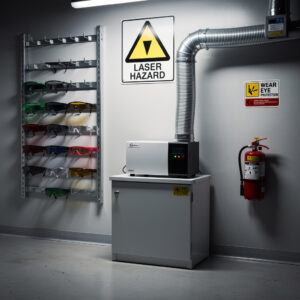
Workspace zoning: Establish laser operation zones restricting access during active processing. Children, pets, and visitors should not enter laser workspaces when machines operate. Post warning signage indicating laser hazards and required personal protective equipment. These zoning practices supplement physical safety measures and demonstrate responsible operation to anyone observing your workspace.
Electrical and Mechanical Safety
Beyond laser-specific hazards, these machines present conventional workshop risks including electrical shock, mechanical entanglement, and ergonomic strain. High-voltage power supplies, moving mechanical systems, and repetitive operations require attention to prevent injuries unrelated to laser radiation but equally capable of causing serious harm.
Electrical safety considerations: CO2 lasers operate high-voltage power supplies (15,000+ volts) to excite laser tubes. These voltages can be lethal. Never open power supply enclosures or access high-voltage components while plugged in. Ensure proper grounding of all conductive machine components. Use ground fault circuit interrupters (GFCIs) on power circuits. Avoid operating with wet hands or in damp environments. If you smell burning electronics or see arcing, immediately power down and seek qualified service before continued operation.
Mechanical hazards: Moving gantries, lead screws, and belt systems present entanglement and pinch risks. Keep loose clothing, jewelry, and long hair secured when working near operating machines. Know the location of emergency stop buttons and use them immediately if clothing or body parts contact moving mechanisms. Never reach into operating machines to clear debris or adjust material, always pause operations first.
Ergonomics and repetitive strain: Extended laser operation involves repetitive motions loading materials, adjusting focus, and monitoring jobs. Position machines at comfortable working heights to prevent back strain. Use proper lifting techniques for heavy material sheets. Take regular breaks to prevent eye strain from monitoring operations and repetitive motion injuries from control interfaces. Comfortable operators are safer operators.
Emergency Procedures and Preparedness
Despite best prevention efforts, emergencies occasionally occur. Having established response procedures prevents panic and minimizes damage when incidents happen. Document these procedures visibly near your laser workstation and review them regularly with anyone sharing your workspace.
Emergency stop procedures: Know the location and operation of all emergency stop mechanisms on your machine. Test them periodically to verify function. Emergency stops should immediately disable laser emission, motion systems, and exhaust fans. If your machine lacks prominent emergency stops, consider adding external mushroom buttons wired into the safety circuit.
First aid for laser injuries: Eye injuries from laser exposure require immediate medical attention, even if symptoms are not immediately apparent. Do not rub eyes or apply pressure. For skin burns, cool the area with running water and cover with sterile dressing. Seek medical evaluation for any suspected laser injury, documenting the laser type, wavelength, and circumstances for healthcare providers. Report incidents to laser safety officers if operating in commercial or educational environments.
Emergency contact information: Post visible lists including local emergency services (911), poison control centers, nearest hospital emergency room, and fire department non-emergency line. Include contact information for machine manufacturers or distributors who may provide technical guidance during incidents. If operating commercially, include workers compensation and insurance carrier contacts.
Building a Safety Culture
Individual safety measures multiply in effectiveness when embedded in consistent safety culture. Treating safety as integral to laser operation rather than an obstacle to productivity creates sustainable protection that persists through long work sessions and complex projects. Model safe behavior for others, and expect the same from anyone sharing your workspace.
Pre-operation safety checklist: Before each laser session, verify: safety glasses appropriate for your wavelength are worn by all present, ventilation system operates properly, fire extinguisher is accessible and charged, work area is clear of flammables and tripping hazards, material to be processed is verified safe (no PVC or other toxic materials), and you remain present throughout operation. This brief checklist prevents most preventable incidents.
Continuous learning and improvement: Laser safety knowledge evolves as new materials enter the market and research reveals previously unknown hazards. Stay current through manufacturer safety bulletins, community forums, and professional safety organizations. When incidents occur (near-misses, minor fires, equipment malfunctions), analyze root causes and implement preventive improvements. Share lessons learned with the laser community to elevate collective safety practices.
Documentation and compliance: If operating commercially or in shared spaces, maintain documentation of safety training, equipment certifications, and incident reports. Many jurisdictions require specific safety practices for laser operations above certain power thresholds. Insurance providers may require evidence of safety protocols. Proper documentation protects you legally while demonstrating professional responsibility.
Safety preparation enables confident, creative laser work free from anxiety about preventable accidents. With proper eye protection, ventilation, fire prevention, and emergency preparedness in place, you can focus entirely on producing excellent work. Prepare your workshop infrastructure with these safety principles in mind, then proceed to understand the materials you will process safely and effectively.