Laser Cutting Acrylic Fumes: What It Releases and How to Vent It
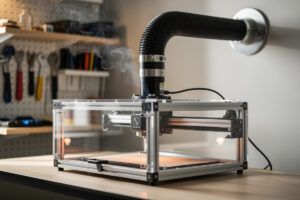
Acrylic gets a reputation as “clean” because it doesn’t reek like burning wood and it doesn’t gas you like PVC. Both of those are true, and both of them lull people into running it with the garage door cracked and no real extraction. That’s a mistake. Cutting acrylic releases a measurable load of vapour and fine particulate into the air you’re breathing, and the sweet smell that makes it seem harmless is the literal sign that you’re inhaling it. After years of running acrylic on my OMTech Polar 350 and my enclosed diodes, my extraction discipline for acrylic is identical to the rest of the bench: ducted to outside, air assist on, no compromises.
Put plainly: acrylic fume is far less dangerous than PVC but still requires real extraction — ducted to outside, never recirculated into the room, with air assist clearing the kerf on every cut. Below I’ll cover what acrylic actually outgasses, why “less acrid than wood” is a trap, the extraction setup that handles it, and the absolute line between acrylic and the look-alikes that turn deadly. The same low-pressure air that keeps an acrylic edge polished is part of the fume story too, so the two decisions are linked. This piece deep-dives one habit from the broader laser cutting acrylic guide.
What Cutting Acrylic Actually Releases
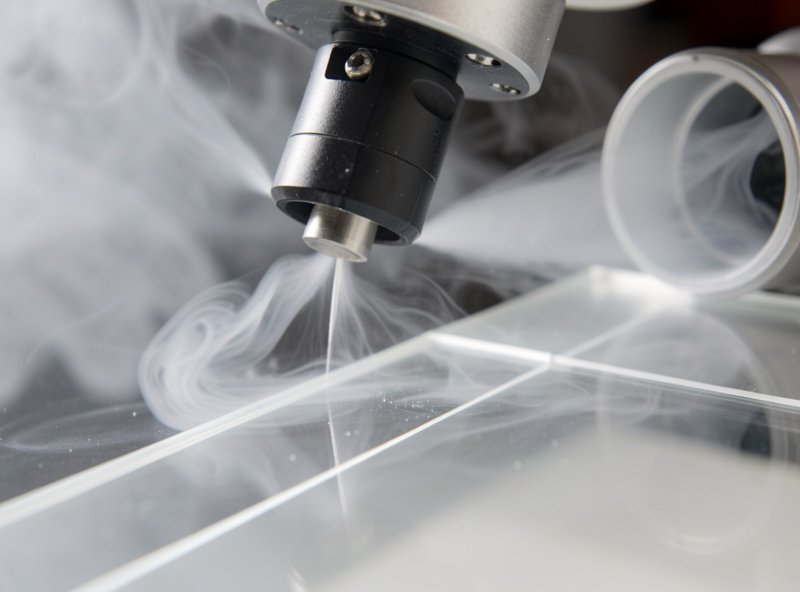
When a laser vaporises PMMA, it doesn’t burn it the way wood combusts — it thermally decomposes the polymer back toward its building blocks. The dominant product is methyl methacrylate (MMA) vapour, the monomer acrylic is made from, plus a load of ultrafine particulate and some carbon monoxide. MMA is the sharp, sweet, slightly chemical smell you get cutting acrylic. It’s an irritant to the eyes, nose, throat, and lungs, and chronic exposure is something to take seriously even though a single small cut won’t hurt you.
The ultrafine particulate is the part people forget. Laser-generated smoke particles are small enough to reach deep into the lungs, and they carry that load whether or not the smell bothers you. This is why “it doesn’t smell that bad” is exactly the wrong way to judge acrylic safety — your nose habituates to MMA quickly, the particulate is odourless, and you end up breathing both while thinking the air is fine. Instruments measure what your nose stops noticing.
Why “Cleaner Than Wood” Is a Trap
Acrylic genuinely produces less visually thick, less acrid smoke than charring hardwood or plywood, and that comparison is real — but it leads people to under-build their extraction. “Cleaner than the dirtiest common material” is not “clean enough to breathe.” The honest framing is a hierarchy: PVC and vinyl are never-cut, lung-and-machine-destroying chlorine producers; acrylic is a manageable irritant that demands proper extraction; and even the “nice” materials like good plywood still need the same ducting. Acrylic sits in the middle, and the middle still requires real ventilation.
The trap specifically catches hobbyists moving up from engraving wood, where a desktop machine with a weak fan seemed “good enough.” Acrylic’s vapour load and fine particulate punish that complacency. The fix isn’t acrylic-specific gear — it’s the same build-once extraction that every material deserves, applied without the “it’s only acrylic” shortcut. If your ventilation is marginal for wood, it’s marginal for acrylic too, and acrylic’s invisible particulate makes the gap easier to ignore until it matters.
The Extraction Setup Acrylic Needs
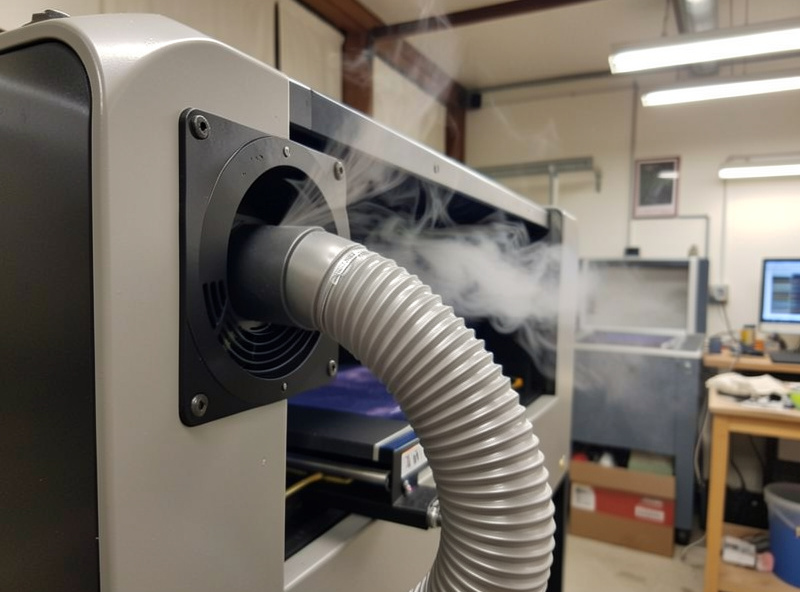
The non-negotiable for me is that fume goes outside, not back into the room. A box fan blowing across the machine and out a window is not extraction — it just stirs the fume around your face on the way past. What works is an enclosure around the cut area, an inline blower pulling air through it, and ducting that carries the fume out of the building entirely. My setup runs the cut zone sealed, an inline blower downstream, and rigid-ish ducting straight outside, with a charcoal stage I add for engraving polish when smell control matters indoors.
Sizing matters: the blower has to move enough air to clear the fume faster than the cut generates it, and the duct run has to be short and straight enough that it doesn’t choke the flow. Long flexible duct with lots of bends kills throughput. I cover the full duct-and-blower sizing logic in my workshop ventilation and exhaust guide, and the broader fire and eye safety in the laser safety essentials — acrylic doesn’t change those fundamentals, it just makes skipping them more tempting because the smoke looks tame.
Air Assist’s Double Job on Acrylic
Air assist on acrylic does two things at once, and there’s a tension between them. It clears smoke and vapour from the kerf so the beam isn’t fighting through its own fog, which improves cut quality and pulls fume toward your extraction. But too much air pressure cools the molten edge and frosts it, so on acrylic I run a lower pressure (5–10 PSI) than I’d use on wood. That lower pressure still helps clear fume; it’s just balanced against edge polish rather than maxed out.
The safety point inside that trade-off: lower air assist means slightly less aggressive smoke clearing and a higher flame-up risk, so a reduced-pressure acrylic cut is exactly the kind of job you never walk away from. Air assist is a cut-quality and fume-management tool, not a substitute for the extraction pulling the fume out of the room. Both run together, every cut. One more layer worth mentioning: masking the sheet doesn’t change what’s in the air, but it keeps the redeposited particulate off the part — so the fume you extract and the residue you mask are two sides of the same smoke problem.
Venting Outside vs Filtering In Place
There are two broad ways to handle acrylic fume, and they’re not equal. Venting outside — ducting the fume out of the building entirely — is the gold standard, because it physically removes the vapour and particulate from your air rather than trying to scrub them. It’s what I run, and for anyone who can route a duct to a window, wall, or eave, it’s the right answer. The downside is it dumps conditioned air and needs a sensible exit point, but for the air you breathe it’s unbeatable.
The alternative is a self-contained filter unit that pulls fume through a pre-filter, a HEPA stage for particulate, and an activated-carbon stage for the MMA vapour, then returns cleaned air to the room. These work and they’re the realistic option for apartments and rentals where ducting outside isn’t possible, but they live and die by filter maintenance: a saturated carbon stage stops adsorbing vapour and quietly passes it straight through. If you go the filter route, budget for replacement cartridges and don’t run them past their life. For acrylic specifically, the activated-carbon stage is the one that handles the smell, so it’s the one that saturates fastest. A bolt-on laser fume extractor with a carbon filter is the unit that makes indoor acrylic cutting tolerable when venting outside isn’t an option, and a stock of replacement activated carbon filter media keeps it actually working rather than just running.
| Method | How it handles fume | Best for | Watch-out |
|---|---|---|---|
| Ducted outside | Physically removes vapour and particulate from the building | Anyone who can route a duct to a window, wall, or eave | Dumps conditioned air; needs a sensible exit point |
| Self-contained filter unit | HEPA for particulate, activated carbon for MMA vapour, returns air to the room | Apartments and rentals where ducting outside isn’t possible | Carbon saturates and silently passes vapour if not replaced |
| Box fan in a window | Stirs fume around the room on its way past | Nothing — it is not extraction | Leaves you breathing the vapour and particulate it doesn’t capture |
As an Amazon Associate I earn from qualifying purchases. These are extraction items I recommend for the no-duct case; venting outside remains the better option whenever you can do it, and no filter replaces it for the worst of the particulate.
Where a Respirator Fits (and Doesn’t)
A respirator is not a substitute for extraction — it’s a backstop for the moments around the cut. Extraction handles the air during the job; a properly fitted organic-vapour respirator protects you in the few minutes after, when you open the lid and the residual fume escapes into the room, or when you’re cleaning soot off parts. The order of priority is firm: extraction first, always, then a respirator as a second layer for lid-open exposure, never the other way around. Relying on a mask while skipping extraction means the rest of the room is still full of fume, and the particulate is settling on every surface you’ll touch later.
The reason extraction has to come first is simple: a respirator only protects the person wearing it, and only while it’s sealed to the face. Extraction protects the whole room and everyone in it, removes the fire-feeding smoke from the enclosure, and keeps the particulate from coating your gear. The mask is the belt; extraction is the trousers. On acrylic, where the smell habituates and the particulate is invisible, that layered discipline is what keeps a routine material routine.
The Line That Never Moves: Acrylic vs the Look-Alikes
Here’s where fume safety becomes life-and-machine safety. Several plastics sold in the same sheets as acrylic are catastrophic in a laser, and the difference between “manageable irritant” and “toxic gas” is whether you’ve correctly identified the sheet. PVC and vinyl release hydrogen chloride and chlorine gas — corrosive enough to rust your machine’s metal from the inside and genuinely dangerous to breathe. This is the hardest ban on my bench and it never bends, no matter how much a sheet looks like acrylic. Polycarbonate looks identical to clear acrylic, cuts terribly, yellows, and outgasses its own nasties.
So the fume conversation always ends at identification. If you cannot positively confirm a clear plastic is acrylic, you do not put it in the laser — the snap test (acrylic fractures glassy and brittle; polycarbonate flexes; PVC is often softer and waxy) is the field check, but “I’m pretty sure” is not confirmation. My full breakdown of the chlorine danger is in PVC laser cutting dangers. Get the material right and acrylic is a manageable, well-extracted material; get it wrong and no amount of ventilation saves your lungs or your machine.
The Bottom Line on Acrylic Fume
Treat acrylic as a material that earns respect, not fear. It’s safe to cut routinely when you’ve confirmed it’s actually acrylic and you run real extraction ducted outside with air assist on every pass. It’s not safe to cut in an unventilated room because “it doesn’t smell that bad,” because the smell is the exposure and the worst of the particulate is odourless. The discipline is identical to the rest of the laser bench — build the extraction once, run it always, and never let the tameness of acrylic smoke talk you out of it.