Laser Engraving Travertine: The Soft Stone That Cuts Deep
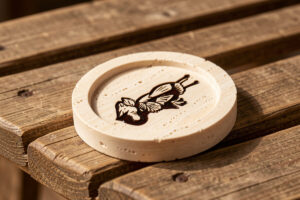
Travertine is the stone that breaks the rules the rest of the family follows. Where slate, granite, and marble are hard, dense materials you engrave as a surface contrast, travertine is soft and porous — so the laser actually engraves with real depth, behaving more like cutting into the stone than frosting its surface. That single difference changes everything about how you work it, and it opens up a look nothing else delivers: a recessed, textured engrave that drinks a paint fill and reads as warm, rustic, and handmade. After running travertine alongside the harder stones on both my diode and my CO2, it has become my go-to whenever a project wants character and colour rather than a clean frosted mark.
This build covers what makes travertine different, the settings that take advantage of its softness, why it is the natural home for colour fill, and the sealing it genuinely needs because of its porosity. If you have read the stone engraving guide, this is the deep dive on the soft, porous outlier of the group.
Why Travertine Engraves with Depth
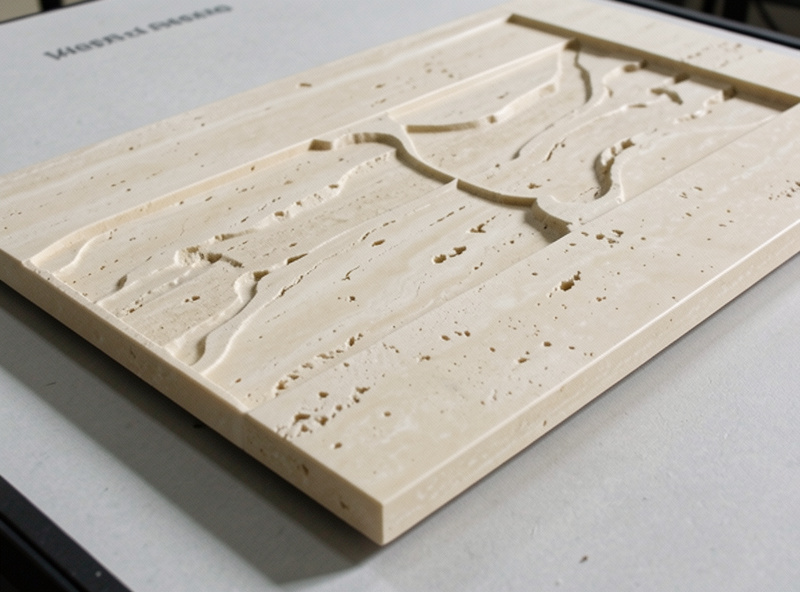
Travertine is a form of limestone deposited by mineral springs, and it is considerably softer and more porous than granite or marble. When the laser hits it, instead of just altering the surface colour, it removes material and cuts a genuine recess — you get depth and texture, not just a tonal mark. On the natural cream and tan travertine most people buy, the engraved recess comes out darker and rougher than the smooth surface, giving contrast through both colour and texture. That tactile, carved quality is travertine’s whole appeal, and it is the opposite of the flat surface frost you chase on slate.
Because you are removing material, travertine is more forgiving of power than the harder stones in one sense — you are not trying to find a narrow “frost without muddying” window — but it brings its own quirk: the natural pitting and voids in travertine vary across every piece, so the surface is never perfectly uniform. That is part of its rustic character, but it means fine detail can drop into a natural pit and disappear. Travertine rewards bold designs and punishes hairline detail even more than slate does.
It is worth understanding the two grades you will encounter when buying. Filled-and-honed travertine has its natural voids filled with a resin or grout and a smoother surface, which gives more even engraving and fewer surprises. Unfilled or “tumbled” travertine keeps all its natural pits and rustic character, which looks wonderful but is less predictable under the laser. For lettering and crisper work I reach for the filled-and-honed grade; for a deliberately rustic, weathered look I let the unfilled stone show its character. Knowing which you have in front of you saves a lot of confusion about why a setting behaves differently from one piece to the next.
Settings That Use the Softness
On my 40W-class diode, travertine engraves to a clean recess at a moderate power and a moderate raster speed with air assist running — and because it is soft, you can get real depth without hammering it. The CO2 does the same faster and is my pick for deeper relief or a larger batch. Neither needs a fiber laser; travertine is comfortable diode and CO2 territory like the rest of the stone family. If you want a deeper carved look, travertine takes multiple passes more happily than the harder stones because there is material to remove, though a single well-judged pass is usually enough for lettering and decor.
As always, you start with a materials test card, and on travertine the test tells you two things: the depth and texture a setting produces, and how the recess takes a fill. I run the grid, fill a few cells, wipe them back, and pick the setting that gives a clean recess holding bold colour. The natural pitting means you accept a little more variation than on engineered stock — that is the material, not your machine. Keep air assist on to clear the dust from the recess as it cuts, which keeps the engrave clean and the edges crisp.
The Natural Home for Colour Fill
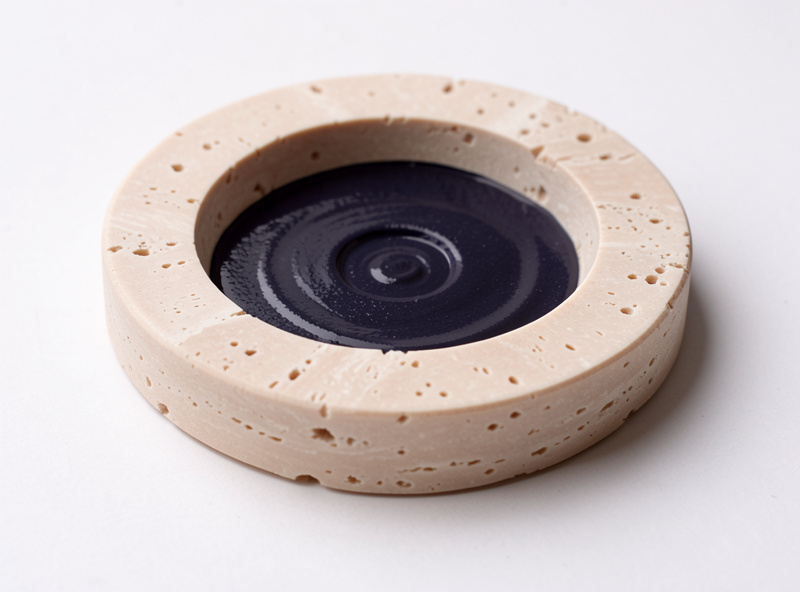
Travertine’s porosity makes it the best stone in the family for the paint-fill technique. The engraved recess physically holds the paint, and the rough lasered surface keys the colour in, so a paint fill on travertine sits crisp and permanent in a way that a surface-marked stone cannot match. White or dark fills in the natural cream stone look striking, and because the recess is genuinely deep, the colour has somewhere to live rather than just sitting on top.
The one caution that comes with that porosity: the surface around the engrave is absorbent too, so you wipe paint back promptly and, on an especially thirsty piece, mask the surface lightly so it does not stain. The depth that makes travertine hold colour so well is also why it stains so easily if you are careless — the same property cuts both ways. Get the fill-and-wipe timing right on a test piece first, and the finished result is some of the most satisfying coloured stone work you can produce.
A nice touch travertine allows that the harder stones do not: because the recess is deep, you can use a slightly thicker enamel or even a layered fill for a raised, tactile colour that catches the light. On a memorial or a feature piece, that bit of physical depth in the colour reads as craftsmanship. Just give each layer time to cure before adding the next, and seal only once the whole fill has fully hardened.
Sealing Is Not Optional on Travertine
Because travertine is so porous, sealing is genuinely necessary rather than just recommended, especially for anything that will get wet or handled. An unsealed travertine coaster will drink up wine, coffee, and water and stain permanently within a few uses, ruining the piece regardless of how clean the engrave is. A penetrating stone sealer soaks into the porous surface, protects against stains, and locks in any paint fill, all while keeping the natural matte character. Apply it after the paint has fully cured so the sealer’s solvents do not disturb the fill.
For an outdoor piece, a sealer is doubly important because untreated travertine weathers and erodes faster than the dense stones. Test the sealer on a scrap engrave first, as it can deepen the apparent contrast and you want to see that before it goes on the finished piece. Seal it properly and a travertine coaster or sign holds up for years; skip the seal and it is a stain waiting to happen.
Safety on Travertine
Travertine is inert and will not outgas chlorine like PVC, but it throws fine limestone dust as it cuts — more visible dust than the harder stones because you are removing material — so air assist and ducted exhaust are not optional, and the enclosure stays closed. That is the standard discipline from laser safety essentials, just more relevant here because of the dust volume. And the universal rule holds regardless of material: never run the job unattended. The fill-and-seal steps add their own ventilation needs for the paint and sealer solvents, so the fume discipline that governs the laser bench extends to the finishing bench too.
Disclosure: Some links below are affiliate links. If you buy through them I may earn a small commission at no extra cost to you. I only point to materials I actually use on my own bench.
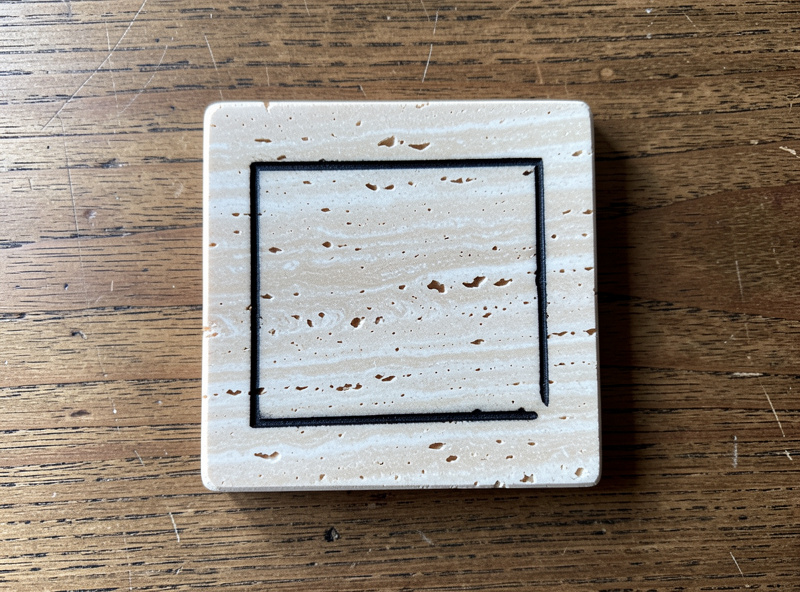
For travertine work, a set of travertine coaster tiles gives you the soft, porous surface that engraves with depth and takes a fill beautifully, and a penetrating stone sealer is essential here, not optional, to protect the porous stone from stains. Keep a few offcuts for testing depth and fill before the real piece.
Frequently Asked Questions
Does travertine engrave differently from other stone?
Yes. Travertine is soft and porous, so the laser removes material and cuts a real recess with depth and texture, rather than just frosting the surface like slate or granite. That carved, tactile quality is its main appeal and makes it ideal for colour fill.
Can a diode laser engrave travertine?
Yes. A 40W-class diode engraves travertine to a clean recess at moderate power with air assist running, and because the stone is soft you get real depth without high power. CO2 is faster for deeper relief or batches, but no fiber laser is needed.
Why is travertine good for paint-fill?
Travertine’s porous, deeply engraved recess physically holds paint and the rough lasered surface keys the colour in, so a paint fill sits crisp and permanent. The depth gives the colour somewhere to live, which surface-marked stones cannot match.
Do you have to seal engraved travertine?
Yes, sealing is genuinely necessary because travertine is so porous it will drink up wine, coffee, and water and stain permanently within a few uses. A penetrating stone sealer protects it and locks in any paint fill while keeping the natural matte look.
Why does fine detail disappear on travertine?
Travertine has natural pitting and voids that vary across every piece, so hairline detail can drop into a pit and vanish. It rewards bold designs and lettering over delicate fine work, even more than rougher slate does.