Diode vs CO2 vs Fiber Laser: Which Type to Buy in 2026
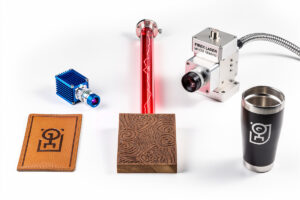
Choosing between diode, CO2, and fiber lasers in 2026 comes down to what you cut and engrave. Diode (450nm, $400-2,000) excels at coated metals and small wood/leather work. CO2 (10.6μm, $2,500-6,000) cuts wood and acrylic faster than anything else. Fiber (1064nm, $3,500-8,000) is the only type that engraves bare metal effectively. Picking the wrong type is the most expensive mistake new laser buyers make — it cannot be fixed by software or upgrades.
This guide breaks down the three laser types by capability, cost, materials, and use case. After 200+ test jobs across 10+ machines representing all three types, the conclusion is clear: most buyers should pick one, not try to combine. Multi-type setups (CO2 + fiber) only make sense for production businesses where each tool earns its workshop space.
Three-Way Comparison
| Aspect | Diode | CO2 | Fiber |
|---|---|---|---|
| Wavelength | 450nm (blue) | 10.6μm (infrared) | 1064nm (near-IR) |
| Typical power | 5-40W | 30-100W | 20-50W |
| Price range | $400-2,000 | $2,500-6,000 | $3,500-8,000 |
| Cut wood | Up to 18mm slow | Up to 25mm fast | Cannot |
| Cut acrylic (clear) | Cannot reliably | Up to 15mm | Cannot |
| Cut acrylic (opaque) | Up to 5mm | Up to 15mm | Cannot |
| Cut leather | Excellent | Excellent (faster) | Surface only |
| Engrave bare metal | Cannot | Cannot | Excellent |
| Engrave coated metal | Excellent | Excellent | Excellent |
| Engrave glass | Frosting only | Excellent | Cannot |
| Best for | Hobbyist + small biz | Wood/acrylic production | Metal marking biz |
Diode Lasers (450nm)
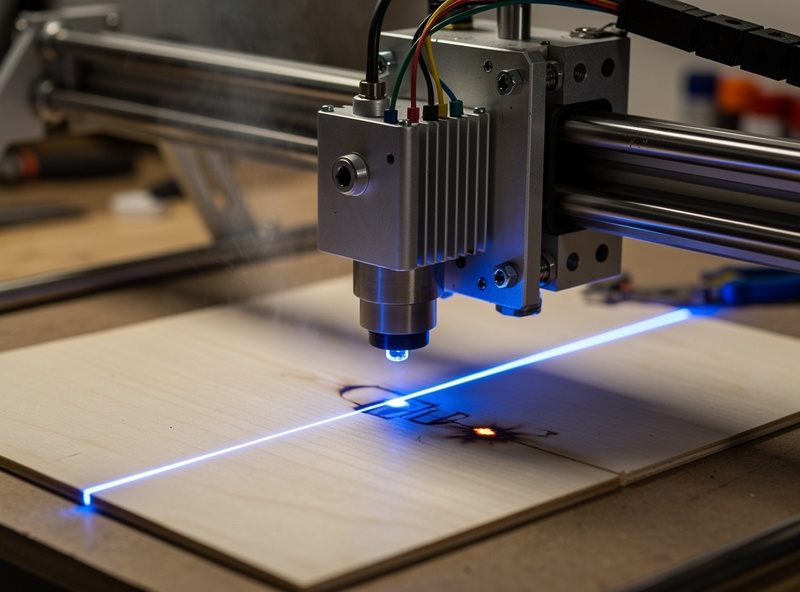
Diode lasers use semiconductor diodes at 450nm blue wavelength. The cheapest laser type per watt — entry models at $400, premium enclosed at $1,899 (xTool S1). Maximum practical power is 40W, beyond which thermal management becomes prohibitively complex.
What diode does well: cuts wood up to 18mm with multiple passes, cuts opaque acrylic, marks coated metals (anodized aluminum, painted steel, powder-coated tumblers) with excellent contrast, engraves leather and basswood photos beautifully. The 450nm wavelength is well-absorbed by darker materials, which is why coated metals work so well — the laser interacts with the coating, not the underlying metal.
What diode cannot do: cut clear acrylic (wavelength passes through), mark or engrave bare metal (energy reflects off shiny metals), cut hardwood faster than CO2. For hobbyist makers and small businesses focused on wood/leather/coated-metal work, diode is the right choice. See our best laser engraver 2026 for diode buying advice.
CO2 Lasers (10.6μm)
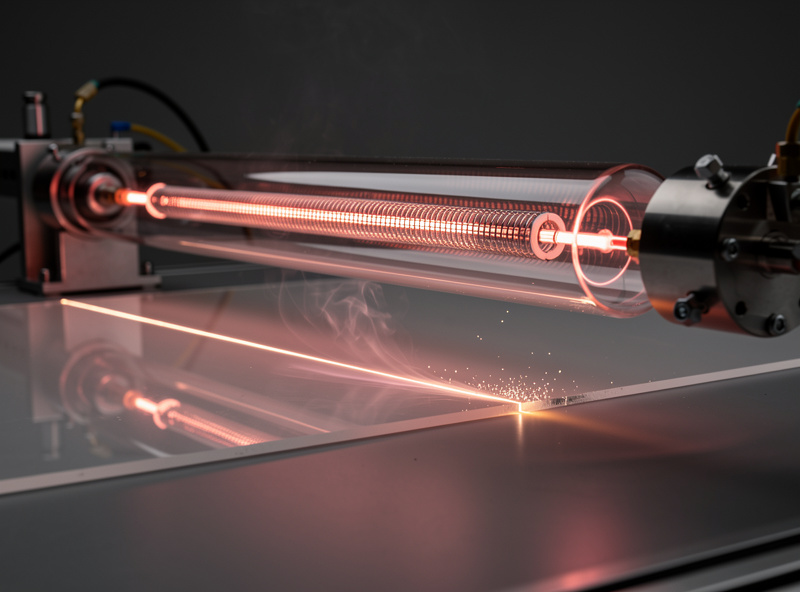
CO2 lasers use a CO2 gas tube to produce 10.6μm infrared. This wavelength is well-absorbed by all organic materials — wood, acrylic, leather, paper, fabric, glass. The result: CO2 cuts these materials 2-3× faster than diode at equivalent rated power. A 6mm cast acrylic sign that takes 4-5 minutes on a 40W diode finishes in 90 seconds on a 50W CO2.
What CO2 does well: cuts wood up to 25mm (with sufficient power), cuts clear acrylic (the only type that handles transparent), engraves glass with clean frosting, cuts leather and felt at production speeds, marks coated metals comparably to diode. The CO2 tube produces a thicker beam than diode, so cuts have a slightly wider kerf but cleaner edges on most materials.
What CO2 cannot do: mark or engrave bare metal (10.6μm reflects off metal surfaces), fit in a small footprint at high power (CO2 chassis grow with tube length), match diode’s 6kg portable footprint at any power. CO2 lasers are stationary, garage-or-workshop tools. Read our OMTech Polar 350 review for the budget CO2 entry.
Fiber Lasers (1064nm)
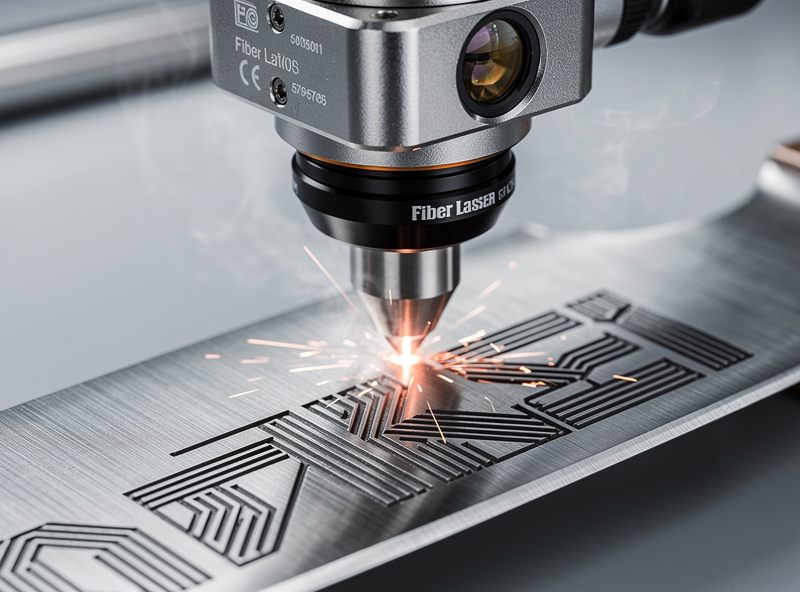
Fiber lasers use diode-pumped fiber-optic cores at 1064nm near-infrared. This wavelength is selectively absorbed by metals — perfect for marking and engraving stainless, anodized aluminum, brass, gold, titanium, and most alloys. Galvo-mirror designs (xTool F1 Ultra) move the beam at 4,000mm/s+, dramatically faster than gantry-based lasers for small-area work.
What fiber does well: deep engraving on bare metals (stainless tumblers, knife blanks, jewelry, dental implants), fast small-area engraving via galvo mirrors, color-changing on stainless via heat tinting techniques, micro-marking on circuit boards or precision parts. Fiber sources last 20,000+ hours essentially maintenance-free.
What fiber cannot do: cut wood (low absorption), cut acrylic (low absorption), engrave glass (low absorption), cut metal beyond 0.5mm steel (insufficient cutting power at hobby tier). Fiber is the metal-marking specialist — exceptional at its niche but useless outside it. See our best fiber laser for metal for fiber buying advice.
Picking the Right Type
Start with the question: what materials will you cut and engrave 80% of the time? Then map to laser type.
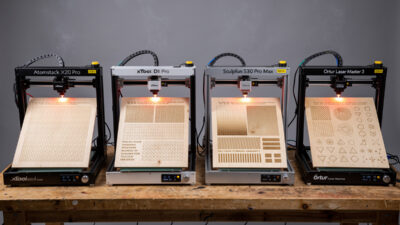
If 80% wood, leather, basswood, plywood, occasional engraving on coated metals: diode laser. xTool S1 at $1,899 or Atomstack X20 Pro at $799 are the picks.
If 80% wood and acrylic (especially clear), production volume, signage business, fast cutting matters: CO2 laser. OMTech Polar 350 at $2,799 or xTool P2 at $3,999.
If 80% bare metal — stainless tumblers, knife blanks, jewelry, anodized aluminum personalization: fiber laser. xTool F1 Ultra at $4,999 or dedicated fiber lasers $3,500-7,000.
Mixed needs (wood + metal): diode + IR module ($1,899 + $399) handles both at hobbyist levels. For production volume, separate diode and fiber lasers ($2,000-4,000 combined).
Multi-Type Setups
Some businesses run two lasers: a CO2 for wood/acrylic cutting and a fiber for metal engraving. The xTool F1 Ultra ($4,999) is the closest single-machine solution — dual-source diode + fiber in one enclosed unit. The diode handles wood/leather/coated metals; the fiber handles bare metals. Total system cost is similar to running separate machines but with workspace efficiency.
For professional shops, separate dedicated machines often outperform combo units. A dedicated CO2 (Polar 350 at $2,799) plus a dedicated fiber ($3,500-5,000) gives you cutting and metal engraving capability with each tool optimized. Combo machines compromise on each capability slightly to fit in one chassis.
Total Cost of Ownership
Diode: low upfront ($400-2,000), low maintenance ($50-150/year for nozzles, replacements), 8,000-15,000 hour module life. Most affordable per hour over 5 years.
CO2: medium upfront ($2,500-6,000), medium maintenance ($80-200/year for water cooling and tube replacement), 2,500-4,000 hour tube life. Tube replacement runs $250-400 every 2-5 years for production users.
Fiber: high upfront ($3,500-8,000), low maintenance ($30-80/year), 20,000+ hour source life. Most expensive upfront but cheapest per hour for production metal-marking businesses.
Decision Framework
Hobbyist / small business / wood + leather: Diode. xTool S1 ($1,899) or Atomstack X20 Pro ($799). See our Atomstack X20 Pro review.
Production wood/acrylic signage business: CO2. OMTech Polar 350 ($2,799) or xTool P2 ($3,999). See our Polar 350 review.
Tumbler/knife/jewelry business: Fiber. xTool F1 Ultra ($4,999) or dedicated fiber. See our fiber laser guide.
Mixed needs or unsure: Diode with IR module ($2,300 total). Most flexibility per dollar for evolving needs.
Frequently Asked Questions
Which is better, diode or CO2 laser?
Depends on materials. Diode is cheaper and excels at engraving on coated metals plus small-batch wood/leather work. CO2 cuts wood and acrylic 2-3x faster than equivalent-wattage diode and can cut clear acrylic. For hobbyist work under $2,000 budget, diode wins. For production cutting, CO2 wins.
Can a CO2 laser engrave metal?
Coated metals only — anodized aluminum, painted steel, powder-coated tumblers. CO2 wavelength (10.6μm) reflects off bare metal surfaces. For bare metal engraving (stainless tumblers, knife blanks, jewelry), fiber lasers are the right tool. CO2 and fiber lasers serve completely different metal use cases.
Why are fiber lasers more expensive?
Fiber sources are inherently more expensive to manufacture than diode modules or CO2 tubes. The 1064nm wavelength is generated through diode-pumped fiber-optic cores requiring precision optics. The upside: fiber sources last 20,000+ hours essentially maintenance-free, making them the cheapest per hour for production users.
Can I cut metal with any laser?
Not at hobby tier. Diode and CO2 cannot cut metal at all. Fiber lasers can cut up to 0.5mm steel at hobby power levels (20-50W). For real metal cutting (1mm+ steel), industrial fiber lasers (200W+) or plasma cutters and waterjets are the right tools.
What about clear acrylic cutting?
Only CO2 lasers reliably cut clear acrylic. Diode lasers (450nm) pass through clear acrylic with minimal absorption. Some diode lasers (xTool S1 40W) added experimental clear-acrylic cutting in 2025 but it works only on thin sheets in multiple passes. For production clear-acrylic work, CO2 is mandatory.
Can I have one machine that does diode and fiber?
Yes. The xTool F1 Ultra at $4,999 is dual-source — 20W fiber for metal plus 20W diode for wood/leather/acrylic in one enclosed unit. The xTool S1 with IR module ($1,899 + $399) is a more affordable hybrid that handles 80% of common metal-marking jobs.
How long does each laser type last?
Diode modules: 8,000-15,000 hours before output drops below 80% of new. CO2 tubes: 2,500-4,000 hours, replacement $250-400. Fiber sources: 20,000+ hours essentially maintenance-free. For typical hobbyist use (5 hrs/week), diode lasts 30+ years; CO2 lasts 10-15 years; fiber lasts 75+ years.