Laser Engraving Rings and Jewelry: A Fiber Setup Guide
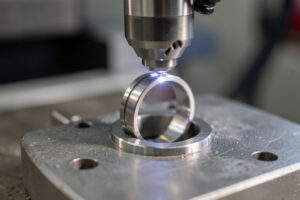
Yes, you can laser engrave rings and jewelry, but only with the right tool: a fiber or MOPA marker at 1064nm. Diode and CO2 lasers cannot mark bare precious metal. The fiber anneals or ablates; for fine jewelry, annealing is the move.
Why a Fiber (Not Diode or CO2) Is the Only Sensible Tool
The wavelength is the whole story. A fiber laser fires at 1064nm, which bare metal absorbs well enough to mark; a diode (450nm) and a CO2 (10.6 microns) just bounce off polished metal or need a sprayed-on coating that you have to clean afterward. On my bench the fiber is the only laser I’ll put a ring under. I run a desktop fiber/MOPA marker specifically for metal, and it sits in a different category from the xTool S1 or the OMTech Polar CO2 I use for wood and acrylic. If you’ve been trying to scratch a ring with a diode, stop. You’re wasting passes and risking a smeared, illegible mark. For the broader case, I laid this out in my diode vs CO2 vs fiber comparison, and the short version is that jewelry is squarely fiber territory.
Annealing vs Ablation: Keep the Finish or Dig In
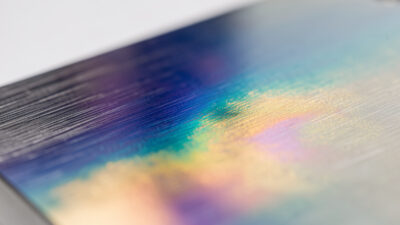
Annealing is a surface heat-tint mark that removes no material; ablation actually vaporizes a shallow layer. For jewelry that must keep its finish and strength, annealing wins almost every time. It’s the technique I reach for on rings.
When I anneal, I’m running low power, slower speed, and a defocused or near-focus beam to gently heat the metal surface until it oxidizes into a dark, contrasty mark sitting on top of the metal. Nothing is removed, so the band keeps its structural cross-section and the mark won’t catch a fingernail. That matters on a ring people wear daily. Ablation, by contrast, throws more power and digs a groove. It’s fine for industrial part IDs but it removes metal, which on a thin band you do not want. The way I tune mine, I start in the anneal window and only step toward ablation if a customer specifically wants a recessed mark. For deeper work on heavier stock, I keep a separate process documented in my deep metal engraving guide, but that’s not a jewelry technique.
How Each Jewelry Metal Behaves Under the Beam
Not all jewelry metals mark the same. Tungsten and titanium take crisp dark marks with little fuss; stainless is forgiving; brass is easy; and gold, silver, and platinum are fussier because their high reflectivity sends energy straight back at the optics. Here’s how they sort out on my bench.
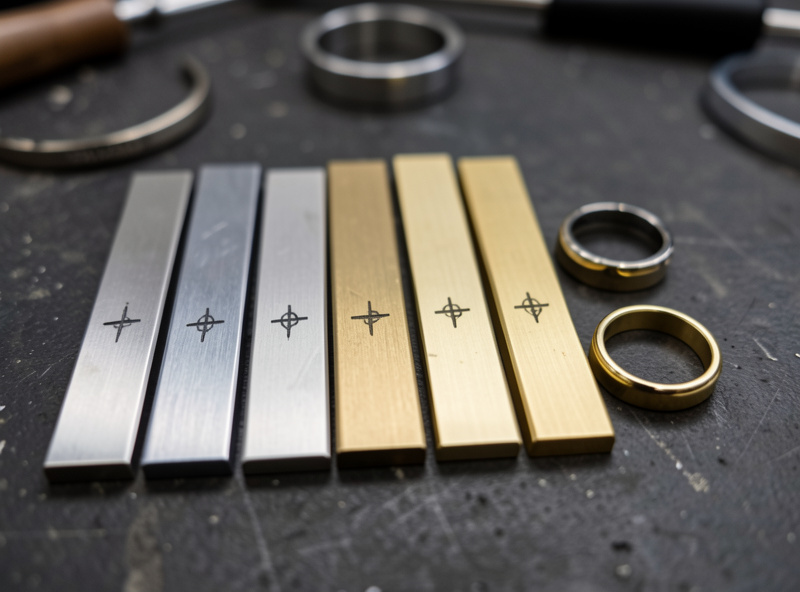
| Metal | Best method | Ease | Contrast | Notes from my logs |
| Stainless steel | Anneal or ablate | Easy | High | Most forgiving metal; deep black anneals are reliable. |
| Titanium | Anneal | Easy | Very high | Takes crisp dark and color anneals; my favorite to mark. |
| Tungsten | Anneal or ablate | Moderate | High | Hard and crisp; dark marks come up clean but it’s stubborn. |
| Brass | Ablate | Easy | Moderate | Marks readily; expect a lighter, frosted look rather than black. |
| Gold | Low-power anneal | Fussy | Lower | High reflectivity; reduce power, fixture well; jewelers report alloy varies. |
| Silver | Low-power anneal | Fussy | Lower | Very reflective; needs careful focus and reduced power on my bench. |
| Platinum | Low-power anneal | Fussy | Moderate | Dense and reflective; the trade reports it behaves differently per alloy. |
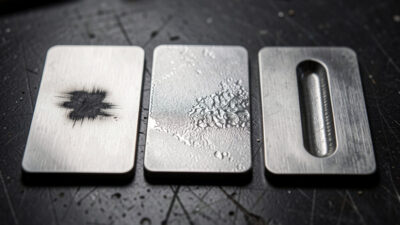
Treat the ease and contrast columns as qualitative. Every alloy lot is different, which is why I cut a power and speed test card on a scrap of the same metal before I touch a real piece.
The Precious-Metal Reflectivity Problem and Low-Power Approach
Gold and silver fight you because they’re highly reflective: a chunk of the 1064nm energy bounces back instead of being absorbed, so a setting that nails a black mark on titanium just skates across silver. The fix is reduced power, tight focus, and good fixturing.
In my test logs, reflective precious metals also send energy back toward the galvo and lens, which is a real reason to keep power conservative rather than just cranking it to force a mark. I drop power well below my steel settings, slow the speed, and sometimes adjust frequency so each pulse deposits heat more gently. The goal on gold and silver is a controlled heat-tint, not a fight. I’ll run several light passes before I’ll run one hot pass. And I never assume a setting transfers between a 14k gold and an 18k gold piece, because the alloy ratio changes how it absorbs. That’s bench reality, not a spec sheet.
Inside-Band Marking on a Curved Surface
Inside-band engraving is where a rotary attachment or a dedicated ring fixture earns its keep. A ring’s inner surface is curved and recessed, so you can’t just lay it flat under the lens; you need to present the curve to the beam and keep it in focus across the arc.
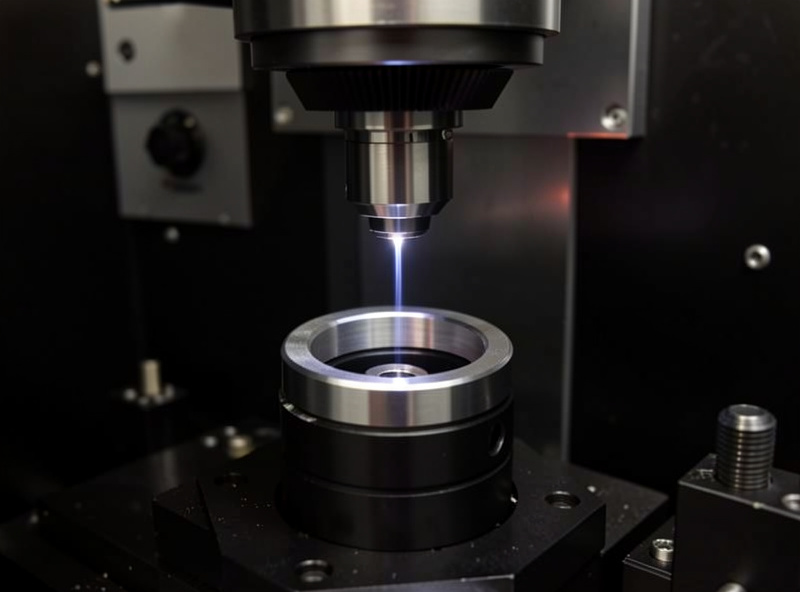
I use a rotary to index the ring so the section under the lens is roughly tangent to the focal plane, then mark in short arcs and rotate. Focus is the make-or-break: on a curved band, only a narrow strip is at true focal distance, so I keep each pass short and re-focus or let the rotary bring fresh metal into the sweet spot. A proper ring jig with a tapered mandrel does the same job for a static mark on a small section. I cover the hardware side in my rotary attachment guide, and the same indexing logic I use for cylinders applies here. For repeatable placement piece to piece, the jig is everything; I frame and preview every part before I fire.
Tiny-Text Legibility, Dot Size, and DPI
Legibility of small text comes down to dot size versus character height. A fiber’s focused spot has a finite diameter, and once your text gets small enough that a stroke is only a couple of dots wide, it turns to mush. Knowing your dot size sets the floor on font size.
On my bench I keep small text to a clean sans font, bump the line interval and DPI up so strokes are solid, and accept that there’s a hard minimum below which a name or date just won’t resolve. If a customer wants a long inscription on a narrow band, I tell them straight: there’s a physical limit, and crowding it produces a smear, not a mark. I’d rather run a slightly larger, perfectly legible engraving than promise microscopic text the beam can’t hold. Test the actual string on scrap at the actual size first; that’s the only way to know it reads.
Where I Defer to Professional Jewelers
I’m a laser operator, not a jeweler. I mark metal; I don’t certify it. There’s a clear line where my authority stops and a professional jeweler’s begins, and I stay on my side of it.
Hallmarking standards, assay, resale and appraisal implications of adding a mark, and anything that reads as trade certification are not mine to claim. The trade and professional jewelers handle those, and standards vary by country and metal. I’ll tell you how a mark behaves on the surface and how to make it legible; I won’t tell you whether marking a piece affects its appraised value or complies with a hallmarking scheme. I also don’t size, resize, or alter jewelry. If a piece is valuable or sentimental, talk to a jeweler before it goes under any laser, mine included.
Safety: Fiber Adds a 1064nm Hazard
Safety on a fiber is non-negotiable and a bit different from a diode or CO2. The 1064nm beam is invisible and reflective metal makes scatter worse, so eye protection and proper enclosure shielding are mandatory, not optional. Everything else from my other lasers still applies.
Air assist stays on. Marking metal still produces fine fume, so my exhaust is ducted OUTSIDE and never recirculated into the room. I never run a job unattended and the fire kit is within reach; I keep that whole protocol documented in my fire suppression guide. The fiber-specific addition is the 1064nm wavelength: it’s outside the visible band, so you won’t see it, and a reflective ring can throw it where you don’t expect. Proper laser-safety glasses rated for 1064nm and a fully shielded enclosure are the price of entry; I treat the ANSI Z136.1 laser-safety standard as the floor and a reflective ring as a worst-case scatter source. I will not run a bare fiber on an open bench, and neither should you. If you want a vetted machine to build this setup around, I keep current picks in my best fiber laser for metal roundup, and you can compare general listings on Amazon.
As an Amazon Associate I earn from qualifying purchases.
Frequently Asked Questions
Can a diode or CO2 laser engrave a gold or silver ring?
No. Diode and CO2 wavelengths bounce off bare precious metal and will not produce a durable mark without a sprayed coating. A fiber or MOPA laser at 1064nm is the only sensible tool for marking rings and bare jewelry metals.
Does laser annealing remove metal from the ring?
No. Annealing is a surface heat-tint that oxidizes the top layer into a dark mark without removing material. The band keeps its finish and structural cross-section, which is why I prefer annealing over ablation for jewelry people wear every day.
Why is gold harder to mark than titanium?
Gold is highly reflective, so much of the 1064nm energy bounces back instead of being absorbed. Titanium absorbs and anneals readily. For gold and silver I reduce power, tighten focus, and fixture carefully rather than forcing a hot pass.
How do you engrave the inside of a ring band?
I use a rotary attachment or a tapered ring fixture to present the curved inner surface to the beam and keep it in focus. I mark in short arcs and rotate, because only a narrow strip of a curved band sits at true focal distance at once.
How small can laser-engraved text be on a ring?
Dot size sets the floor. Once a stroke is only a couple of dots wide the text turns to mush. Keep small text to a clean sans font, raise DPI and line interval, and test the actual string on scrap at the real size first.
Is laser marking a ring safe to do at home?
Only with proper protection. A fiber emits an invisible 1064nm beam and reflective metal worsens scatter, so you need 1064nm-rated glasses and a fully shielded enclosure. Keep air assist on, duct fume outside, and never run a job unattended.