Custom Laser-Engraved Wood Signs: A Build Guide
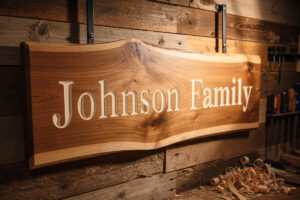
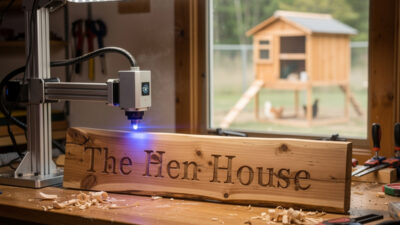
A custom laser-engraved wood sign is the project where alignment and depth stop being optional. You are working at a scale where the design is often bigger than the laser bed, where the difference between engraved and cut-through lettering changes the whole look, and where a paint-fill can turn a plain engrave into something that reads from across a room. I make signs on both my diode and CO2 machines, and the decisions you make before the laser fires matter more than the settings.
This build covers choosing the wood and size, tiling a design larger than your bed, deciding between engraved, cut-through, and raised lettering, and the paint-fill and finish steps that make a sign look professional. It is one of the higher-skill builds on the laser project ideas hub, and it shares a problem with the CNC: a routed sign and a laser sign solve the same job with different physics, which the laser vs CNC comparison breaks down.
Choosing Wood and Sizing the Sign
Pick a flat, stable hardwood or quality plywood for signs — solid hardwood for premium pieces, baltic birch ply for larger or budget signs that resist warping. Size the sign to your purpose first, then plan how to fit it on your bed, because most meaningful signs are larger than a desktop laser’s working area and need tiling.
Solid hardwood gives the best look for a small-to-medium sign — maple, walnut, and cherry all engrave with good contrast and take a finish beautifully. For anything large, quality plywood is the smarter choice because a wide solid board can cup and warp, while baltic birch ply stays flat. Whatever you choose, the board must be flat: a sign that rocks on the bed engraves at inconsistent depth because the focus distance changes across a warped surface. The best wood for laser engraving guide covers contrast and char by species, and the materials test card applies — run a corner test on each board, because a wide sign shows any inconsistency in the engrave depth far more than a small piece does.
Tiling a Design Larger Than Your Bed
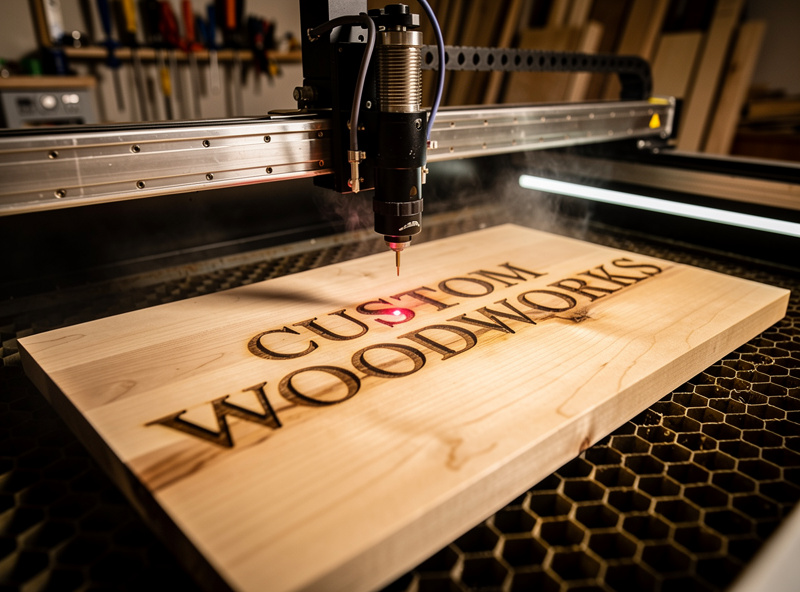
Tiling means splitting a sign too large for your bed into sections, engraving each, and repositioning the board between passes — done carefully with registration marks, the seams are invisible. This is the core large-format skill, and a camera-equipped machine running LightBurn makes it far easier by aligning each pass to the previous one.
The reliable method is to add registration marks to your file — small reference points or a frame that prints across tile boundaries — so when you slide the board to engrave the next section you can line the new pass up precisely to the last. LightBurn with a calibrated camera handles this elegantly: you position the board, the camera overlays the design on the live bed, and you nudge it into alignment before each pass. Without a camera, physical stops or a fence along one edge of the bed let you slide the board a known distance between tiles. The trap is rotational error — if the board shifts even slightly out of square between passes, the seam shows as a step in the lettering. Take the time to register each pass and the finished sign reads as one continuous engrave. For very large signs, designing the layout so seams fall in negative space between words hides any tiny misalignment.
Engraved vs Cut-Through vs Raised Lettering
Signs use three lettering approaches: engraved (recessed into the surface), cut-through (letters cut completely out, for backlit or layered signs), and raised (the background engraved away to leave letters standing proud). Each gives a distinct look and a different difficulty, and the choice drives your whole file setup.
Engraved lettering is the simplest and most common — the laser rasters the letters into the surface, and a paint-fill makes them pop. Cut-through lettering removes the letter shapes entirely, which suits layered signs where a contrasting backing shows through, or signs lit from behind; the challenge is the counters of letters like O, A, and R, which need tiny bridges or a stencil-style font so the centres do not fall out. Raised lettering is the most material- and time-intensive: you engrave away the entire background so the letters stand up in relief, which looks premium but takes far longer and removes a lot of wood. For most makers, engraved-and-paint-filled gives the best result-to-effort ratio, and raised is reserved for showpiece signs. Match the font to the method — thin script works engraved but falls apart cut-through, while a bold slab font handles all three.
Paint-Fill and Finishing
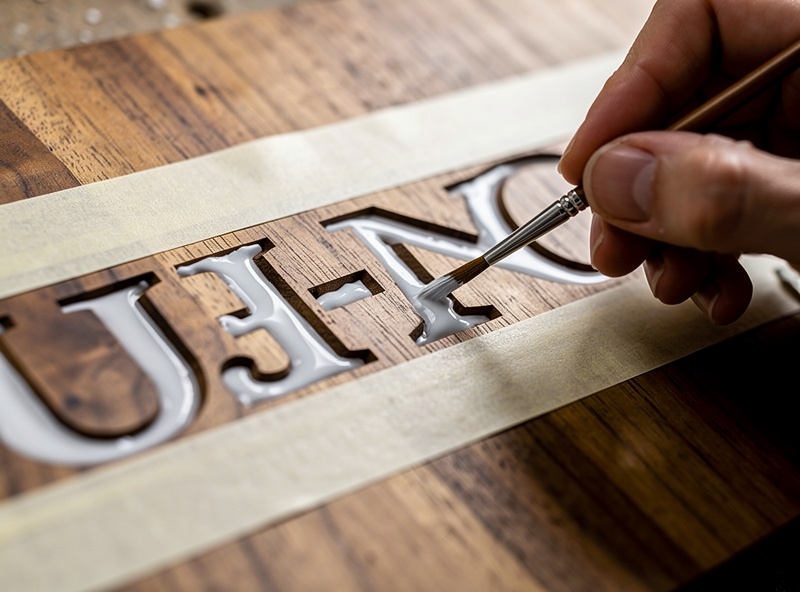
Paint-filling engraved lettering is what makes a sign read from a distance: brush paint into the recessed letters, wipe the excess off the masked surface, and the letters stand out in sharp contrast. Finish the whole sign with oil, stain, or a clear coat to protect the wood and unify the look.
The clean way to paint-fill is to leave masking tape on the surface during the engrave, then brush acrylic or enamel into the engraved recesses while the tape still protects the surrounding wood. Let it tack up, peel the tape, and the overspill lifts away leaving crisp filled letters. Without masking you can still fill, but you will spend time sanding paint off the surface. After filling, a finish coat protects everything — a wipe-on oil for a natural matte look, a stain to change the wood tone, or a clear polyurethane for an outdoor-tolerant sign. For signs that will live outside, an exterior-rated clear coat and a hardwood or marine-grade ply are worth the extra cost, because untreated wood and water-based paint will not last a season outdoors. Add a keyhole hanger or sawtooth on the back and the sign is ready to mount.
Sign Lettering Methods Compared
| Method | Look | Difficulty | Best For |
|---|---|---|---|
| Engraved + paint-fill | Crisp recessed letters | Low | Most signs, best effort ratio |
| Cut-through | Open letters, layered/backlit | Medium | Address signs, layered art |
| Raised (relief) | Letters standing proud | High | Premium showpiece signs |
| Engraved, unfilled | Subtle tone-on-tone | Lowest | Rustic, understated style |
Disclosure: Some links below are affiliate links. If you buy through them I may earn a small commission at no extra cost to you. I only point to materials I actually use on my own bench.
For larger signs, sheets of baltic birch plywood stay flatter than solid boards and tile predictably. For crisp paint-filled lettering, a roll of wide laser masking tape is what makes the fill clean instead of a sanding chore.
Related Builds
- Laser Engraving Project Ideas: The Project Hub
- Laser Cut vs CNC Router for Signs
- Best Wood for Laser Engraving
- Best Laser Engraving Software
Frequently Asked Questions
What wood is best for laser-engraved signs?
Solid hardwood like maple, walnut, or cherry for small premium signs; baltic birch plywood for large signs that resist warping. The board must be flat, because a warped surface engraves at inconsistent depth.
How do I engrave a sign bigger than my laser bed?
Tile it: split the design into sections, engrave each, and reposition the board between passes using registration marks. A camera-equipped machine running LightBurn aligns each pass to the previous one for invisible seams.
Should sign letters be engraved or cut through?
Engraved and paint-filled gives the best result-to-effort ratio for most signs. Cut-through suits layered or backlit signs but needs bridges on letter counters. Raised relief looks premium but takes far longer.
How do I paint-fill engraved sign letters cleanly?
Leave masking tape on the surface during the engrave, brush paint into the recessed letters, let it tack up, then peel the tape so the overspill lifts away leaving crisp filled lettering.
Can I make a wood sign for outdoors?
Yes, but use a hardwood or marine-grade plywood and seal it with an exterior-rated clear coat. Untreated wood and water-based paint will not survive a season outside, so material and finish choice matter.
Diode or CO2 laser for wood signs?
Both work. A diode engraves wood signs beautifully and cuts thinner stock; a CO2 cuts thicker hardwood faster and handles large cut-through lettering more easily. The decision depends on sign thickness and volume.