Laser Cutting Mylar Sheet Settings: Stencils and Film
Good laser cutting mylar sheet settings run fast and light: roughly 15-30% power and 200-350mm/s in a single pass on 5-10 mil PET film. But the most important step comes first, confirm the film is genuine polyester PET, not PVC vinyl, which releases chlorine gas.
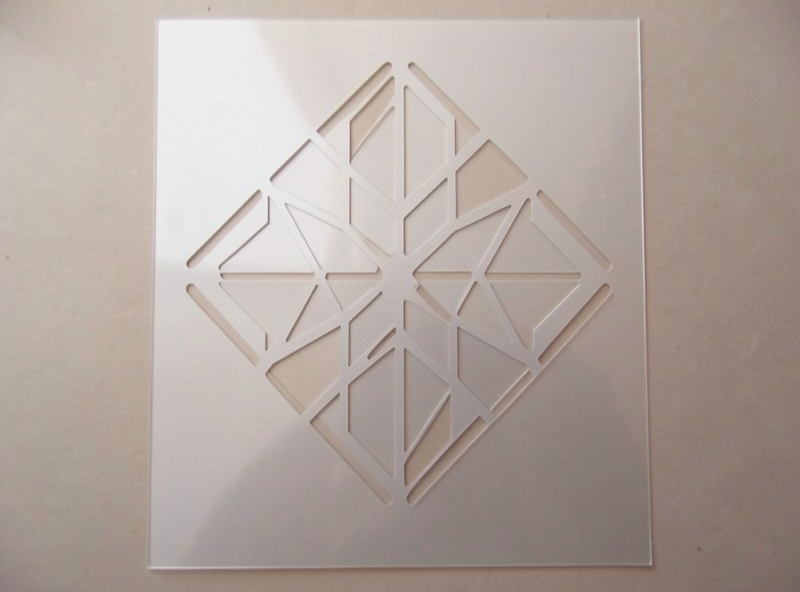
Mylar is one of those materials that is deceptively easy to cut and deceptively easy to get wrong. Genuine mylar, biaxially-oriented PET film, cuts a crisp edge for airbrush stencils, solder-paste masks, templates, and packaging mockups. But the thin film wants to lift and curl the instant the beam touches it, and the label on the roll matters more than the dial settings, because a lot of craft film sold as vinyl is PVC and has no business near a laser.
Laser Settings for Cutting Mylar
For 5-10 mil PET mylar, start at 15-30% power and 200-350mm/s in a single pass on a 40W diode or 50W CO2. Because the film is so thin, favor speed over power: two fast light passes beat one slow hot pass, which dumps heat and warps the kerf into a fused, melted edge.
The whole game with mylar is keeping heat out of the film. Thin PET cuts with very little energy, so the temptation to slow down for a deeper cut is exactly wrong, a slow pass overheats the surrounding film and you get a warped, beaded edge instead of a clean line. When a single fast pass does not fully sever, I add a second fast pass at the same setting rather than slowing down. This keeps the cut crisp and the film flat. Two details matter more than the raw power number on film this thin. First, focus: I set the focal point on the top surface of the film, not the bed below it, because even a thin film cuts best with the waist of the beam right at the cut line. Second, registration on multi-part stencils. A complex stencil with many small islands wants the cut order set so the delicate interior detail cuts last, while the sheet is still held flat by its uncut border; cut the border first and the freed interior shifts. I set the cut order deliberately in LightBurn for exactly this reason. The thin-film hold-down discipline is the same one I use on light cork sheet, where a lifted corner ruins alignment just as fast. For the wider lineup of films and which machine handles each, my specialty materials guide is the hub that ties it together, and the broader materials guide covers everything else I run.
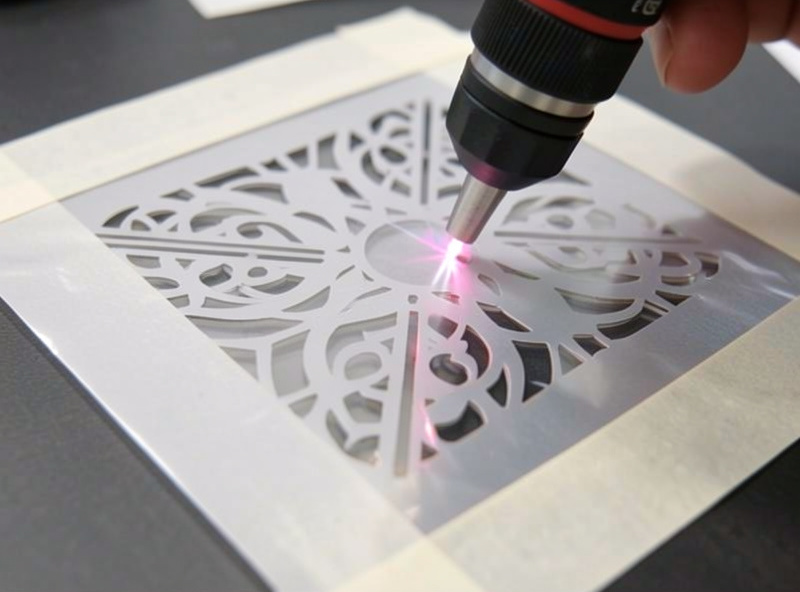
Holding Thin Film Flat
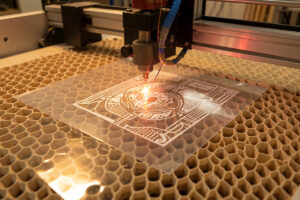
Thin mylar lifts, curls, and shifts the instant the beam touches it, which ruins alignment on a multi-part stencil. Hold it flat with low-tack tape at the corners or a light magnetic hold-down at the edges, and run it on a honeycomb bed so the cut-through energy and air escape underneath rather than reflecting back.
This is the practical headache that catches people out. A loose sheet of mylar will move mid-job and turn a precise stencil into scrap. I tape every corner down with low-tack masking tape, or for repeat work I use light edge magnets on the honeycomb. Air assist actually helps here too, because the airflow keeps the molten edge from beading back into the kerf and keeps the cut clean. Mylar is one of the few materials where the honeycomb bed genuinely beats a flat slat bed, since it lets the cut-through energy and the airflow vent underneath instead of bouncing back up into the film and causing flashback marks on the underside.
PET vs PVC: The Distinction That Matters Most
Genuine mylar is PET polyester and cuts safely; PVC-based vinyl film looks similar but releases chlorine gas that corrodes the machine and harms lungs. Confirm the film is labeled PET before cutting. If a roll is sold only as “vinyl” or has no clear composition, do not laser it until you have identified it.
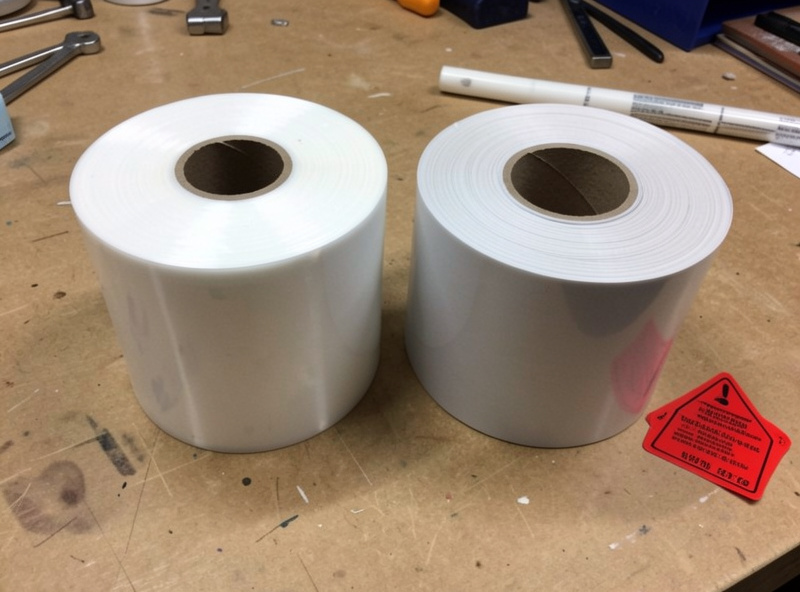
This is the non-negotiable part. PVC near a laser is a hard ban on my bench, and the trap with thin films is that “vinyl” gets used loosely for both PET and PVC products in the craft world. PET mylar is the silvery or clear polyester film used for stencils and emergency blankets; PVC vinyl is the stuff cutting plotters use, and it is chlorine waiting to happen under a laser beam. The full reasoning on why PVC corrodes optics and rails and harms your lungs is in my PVC dangers writeup, and the general material-identification discipline is in my laser safety essentials. If a film is not clearly identified as PET polyester, it does not run, full stop.
When a film is unlabeled, I treat identification as the actual job. PET is the polyester film classified under ASTM D882 for tensile-tested plastic sheeting and is what genuine mylar is; the safe field test is a small scrap burned by hand well away from the laser. PET burns with a yellow-orange flame, drips, and smells faintly sweet; PVC self-extinguishes the moment you pull the flame, releases an acrid, eye-stinging white smoke, and a copper-wire Beilstein test flashes green, the classic chlorine tell. That chlorine matters because hydrogen chloride is regulated by OSHA at a low ceiling exposure for a reason; it is genuinely corrosive to lungs and to the laser optics alike. I would rather spend two minutes on a burn test than an afternoon stripping corroded residue off my lens and rails.
Mylar Settings by Thickness
Film thickness drives the settings more than anything else, and thin film genuinely wants different handling than the thicker sheet. This table is my starting point before a test card confirms the specific film.
| Thickness | Power | Speed | Passes | Best use |
|---|---|---|---|---|
| 2-3 mil | 12-18% | 350-450mm/s | 1 | Fine detail stencils |
| 5-7 mil | 15-25% | 250-350mm/s | 1 | Airbrush, solder masks |
| 10 mil | 20-30% | 200-300mm/s | 1-2 | Durable reusable templates |
| 14+ mil | 25-35% | 150-250mm/s | 2 | Heavy-duty jigs |
Fume and Safety on PET Film
Genuine PET mylar produces low fume when cut, but it still outgasses, so air assist and ducted exhaust to the outside run on every job. The bigger safety issue with film is misidentification, not the PET itself; the entire fume risk changes if the “mylar” is actually PVC. Never cut unidentified film, and never run any job unattended.
Cutting genuine PET is one of the lower-fume jobs on the bench, comparable to thin acrylic, but it is plastic, so I never treat it as fume-free. Air assist runs to keep the edge clean and the lens clear, ducted exhaust pulls the vapor outside, and I stay at the machine. The reason I hammer the identification point so hard is that the safety profile is entirely a function of what the film actually is: PET is fine, PVC is genuinely dangerous, and they can look identical on the roll. Get that identification right and mylar is a clean, fast, satisfying material; get it wrong and you have corroded your machine and filled your shop with chlorine.
Sourcing Mylar and Hold-Down Supplies
As an Amazon Associate I earn from qualifying purchases.
For stencils and masks I buy clearly labeled PET mylar sheets in known thicknesses, because buying film that is explicitly polyester is the simplest way to stay clear of the PVC trap entirely. To keep the thin film flat without leaving residue on the cut, a roll of low-tack masking tape is the cheap fix for the lift-and-curl problem. The laser is a direct buy, but labeled film and tape are the genuine consumables a stencil habit runs through.
Frequently Asked Questions
What settings cut mylar cleanly?
Start at 15-30% power and 200-350mm/s in a single pass for 5-10 mil PET mylar on a 40W diode or 50W CO2. Favor speed over power, since thin film overheats and warps on a slow pass. Add a second fast pass instead of slowing down if needed.
Is mylar safe to laser cut?
Genuine PET polyester mylar is safe to laser and produces low fume, though air assist and ducted exhaust still run on every job. The danger is misidentification: PVC-based vinyl film looks similar but releases chlorine gas. Confirm the film is labeled PET before cutting.
Why does my mylar warp and curl when cutting?
Thin film lifts in the air-assist stream and overheats on slow passes. Hold it flat with low-tack tape at the corners or edge magnets on a honeycomb bed, and favor fast light passes over slow hot ones. The honeycomb lets cut-through energy vent underneath.
How do I tell PET mylar from PVC vinyl?
Check the label: genuine mylar is sold as PET or polyester film, used for stencils and emergency blankets. PVC vinyl is plotter-cutting film and is unsafe to laser. If a roll is sold only as vinyl with no clear composition, do not laser it until identified.
What thickness of mylar is best for stencils?
For fine-detail airbrush stencils, 5-7 mil PET balances crisp detail with durability and cuts in one fast pass. Use 2-3 mil for the finest detail, and 10 mil or heavier for reusable, durable templates that hold their shape through repeated use.
Can a diode laser cut mylar?
Yes. A 40W-class diode cuts 5-10 mil PET mylar in a single fast pass at 15-30% power. Thin film needs very little energy, so a diode handles it easily. Keep the speed high to avoid melting the edge, and confirm the film is PET, not PVC.