Laser Engraving Bamboo and Cork: Settings That Work
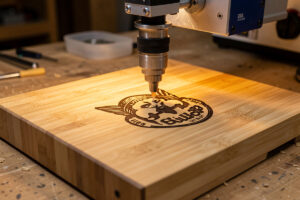
Good laser engraving bamboo settings start around 70-90% power and 250-400mm/s on a 40W diode for a crisp dark engrave. Cork sits far lower at 20-40% power because it burns through fast. Both are diode-friendly organics that behave like opposites under the beam.
Bamboo and cork are two of my favorite specialty materials precisely because they are cheap, fast, and make great gifts, but they punish a one-size-fits-all approach. Bamboo is dense, resinous, and engraves dark and sharp; cork is soft, airy, and turns to ash if you push it. I keep both on the bench and run a fresh test card on every lot, because the variation within each material is bigger than most people expect.
Laser Settings for Bamboo
For engraving bamboo on a 40W diode, start at 70-90% power and 250-400mm/s for a dark, high-contrast mark. Cutting thin bamboo sheet takes 100% power and multiple passes. Bamboo’s hard, silica-rich surface engraves crisp and dark, but density varies node to node, so a test card per lot is essential.
What makes bamboo engrave so well is its natural surface hardness and the way it chars to a clean dark brown rather than a fuzzy burn. A logo or photo on a bamboo cutting board comes out sharp and high-contrast straight off the machine. The catch I hit early on is that bamboo density is not uniform: the harder outer skin and the softer inner pith engrave at different darkness, so a design crossing both can look uneven. I lay out designs to stay on consistent grain where I can, and I always run my standard materials test card first, because one bamboo board takes 80% power for a good mark and the next chars at 70%. For the wider range of organics and which machine suits each, my specialty materials guide is the hub that ties it together.
Two habits lift a bamboo engrave from good to clean. The first is masking. For crisp logos I lay down transfer tape or a light coat of dish soap over the engrave zone, which catches the brown smoke residue that otherwise hazes the bamboo around the mark; peel it off and the contrast pops without a ring of scorch. The second is line interval for photos. Bamboo takes grayscale photo engraves surprisingly well, but only if you dither rather than run a solid raster, and I keep the interval around 0.1mm so the dots read as tone instead of a muddy burn. For text and line art I run a single pass and resist the urge to double it, because a second pass on bamboo widens the char and softens the edges you worked to keep sharp. The board that taught me masking was a wedding gift where the un-masked smoke haze made a clean monogram look smudged from across the room.
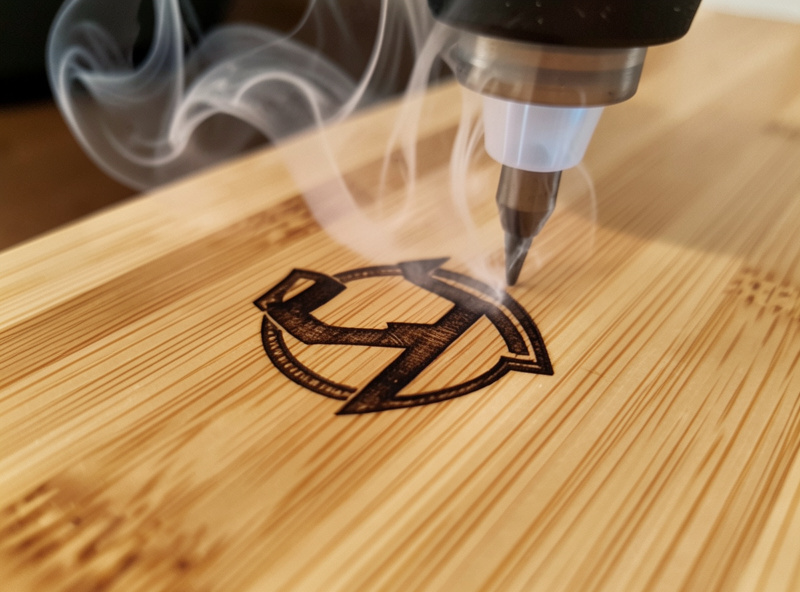
The Glued-Strip Trap in Bamboo Boards
Most bamboo cutting boards are not solid bamboo; they are bamboo strips laminated with glue. The glue lines engrave differently from the fibers, leaving faint blotchy patches where seams run under the design. Lay out artwork to avoid seams, or choose a design that hides the variation.
This one cost me a couple of boards before I understood it. I pulled a board off the bed with a beautiful crisp logo and a pale, mottled patch running right through the middle, exactly where a glue seam sat under the engrave. The glue does not char the same way bamboo fiber does, so it reads lighter and blotchier. Now I either position the design to dodge the seams, pick boards with the seams running outside the engrave zone, or choose busy artwork that camouflages the variation. Solid edge-grain bamboo boards avoid the problem entirely but cost more, so for production gifts I usually just design around the seams.
There is a food-safety angle here that most engravers skip. A laser-engraved bamboo board is fine for food contact as long as you only mark the surface and do not introduce a coating or finish that is not food-safe, and the engrave itself is just carbonized wood. The FDA food-contact guidance under 21 CFR 175 is about coatings and adhesives, not the char, so the practical rule on my bench is simple: I never seal a board destined for food with a random spray finish, and I keep any decorative marking on the back or rim rather than the cutting surface. If a customer wants a board they will actually cut on, I engrave the handle or underside and leave the working face clean.
Laser Settings for Cork
Cork engraves at just 20-40% power and 300-450mm/s on a diode; cutting takes 50-70% power in a single pass. Cork is soft and low-density, so excess power simply turns it to ash and crumbles the edge. The best cork marks come from a light tonal engrave, not a deep burn.
Cork is the inverse of bamboo: where bamboo wants power, cork wants restraint. Push the power up looking for a darker mark and you just vaporize the surface into a crumbly, ashy mess that looks cheap. The good-looking cork coasters and boards I make come from a gentle, light-toned engrave where the contrast is the natural color shift of lightly scorched cork, not a deep gouge. Cork is also wonderfully consistent compared to bamboo, so once I have a setting dialed it tends to hold across the lot. It cuts cleanly too, which makes it great for gaskets and coaster blanks, but I keep the power just high enough to sever in one pass and no higher. One more cork quirk worth knowing: it smells strongly when engraved, a toasty, almost coffee-like note that is harmless but lingers, so a charcoal stage on the exhaust earns its keep. And because cork is so light, I tape or weight thin sheets flat, since the air-assist stream will lift a loose corner and ruin alignment on a multi-part job, a hold-down habit that carries across thin materials from cork to mylar film.
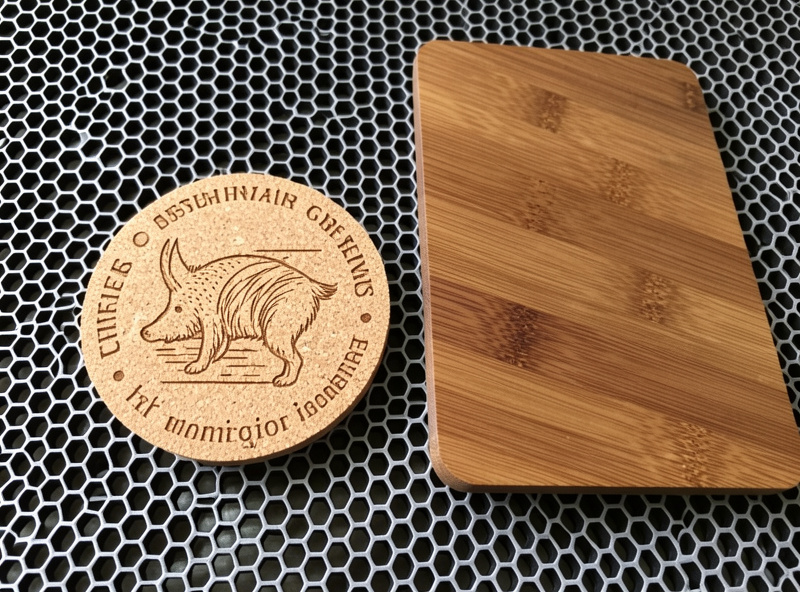
Bamboo vs Cork: Settings at a Glance
The two materials sit at opposite ends of the power scale, which is exactly why people who treat them the same get poor results on one. This table is my starting point before the test card confirms the lot.
| Factor | Bamboo | Cork |
|---|---|---|
| Engrave power | 70-90% | 20-40% |
| Engrave speed | 250-400mm/s | 300-450mm/s |
| Cut power | 100% + passes | 50-70% |
| Density | Hard, varies by node | Soft, consistent |
| Mark character | Dark, crisp | Light, tonal |
| Main pitfall | Glue-seam blotching | Burning to ash |
Fume and Fire Safety on Organics
Both bamboo and cork produce that sweet-acrid organic smoke that needs ducted exhaust to the outside, never a recirculating fan in the room. Air assist runs on every pass to push smoke out of the kerf and reduce scorching, and no organic-material job ever runs unattended, because dry organics are exactly what flares up.
Organics are where the fire-watch rule earns its keep. Bamboo and cork are both combustible, and a small flare-up on a thin cork sheet can spread faster than you would think. I keep the extinguisher and fire blanket within arm’s reach and never step away from a running organic job, full stop. Air assist does double duty here, blowing the flame-feeding smoke off the cut and reducing the surface scorch that ruins a clean engrave. The full fume-and-fire build logic lives in my laser safety essentials, and it is the same discipline I apply across every material I run.
Sourcing Bamboo and Cork Blanks
As an Amazon Associate I earn from qualifying purchases.
For repeatable results I buy bamboo cutting board blanks in batches from a consistent source, because lot-to-lot density swings less when the boards come from one supplier, which means fewer test-card surprises. For coasters and gaskets I keep a stack of cork sheet on hand since it is cheap enough to dial in freely. The laser itself I buy direct, but these blanks are the genuine consumables a bamboo-and-cork habit eats through.
Frequently Asked Questions
What power and speed should I use to engrave bamboo?
Start at 70-90% power and 250-400mm/s on a 40W diode for a dark, crisp engrave. Bamboo’s hard surface takes high power well, but density varies node to node, so run a test card on each new lot before committing to a real piece.
Why does my bamboo board have light blotchy patches?
Most bamboo boards are laminated strips, and the glue lines engrave lighter than the bamboo fibers. Lay out your design to avoid the seams, choose boards with seams outside the engrave area, or pick busy artwork that hides the variation.
What settings does cork need?
Cork engraves at just 20-40% power and 300-450mm/s, far lower than bamboo. It is soft and low-density, so high power turns it to ash. The best cork marks are light tonal engraves, and cutting takes only 50-70% power in a single pass.
Can I laser cut bamboo sheet?
Thin bamboo sheet cuts at 100% power with multiple passes on a 40W diode, though thicker hardwood-grade bamboo is slow going and a CO2 laser does it far more cleanly. For engraving, a diode handles bamboo beautifully at high power.
Are bamboo and cork safe to laser?
Yes, both are laser-safe organics, but they produce combustible smoke and can flare. Run air assist on every pass, ducted exhaust to the outside, and never leave an organic-material job unattended. Keep an extinguisher and fire blanket within reach.